
Salisbury Crags
11 Fascinating things to do in Edinburgh
Experience life like a local as I take you on a whistle-stop tour around some of the city’s most impressive attractions and hidden gems.
Meet Emily
"I’m an Edinburgh local who works in the VisitScotland PR team – here are my top recommendations for your trip to Edinburgh.
"Edinburgh is a city that always has a special place in my heart after all it has been my home for almost 30 years. With so many things to do in Edinburgh, it can be quite overwhelming on where to start your epic adventure around the city."
1. Arthur’s Seat
When it comes to city views, an excellent way to see Edinburgh’s iconic skyline is to hike up Arthur’s Seat. To avoid the busy bustle of the city centre, I travelled by bus mid-morning to beat the crowds and traffic. When you arrive, you’ll almost feel like you’ve been transported to the Scottish Highlands with the extinct volcano standing at 251 metres and atmospheric mist rising from the hills. There are colour-coded walking routes to start your ascent up the summit that you can find on online maps. I didn’t want too much of a strenuous walk and in the end chose the ‘Green Route’. This is an easier walk to the summit and is perfect for families with younger kids. Watch the swans glide across Dunsapie Loch and enjoy a more gradual 30-minute walk to reach the top of Salisbury Crags.
Before you set off on your journey, my advice would be to wear sturdy shoes and warm clothing as it can get a bit chilly. Don’t let that put you off though as the views across Edinburgh are simply spectacular.
Salisbury Crags and Arthur's Seat
2. Edinburgh Castle
If you’re visiting the city for the first time, Edinburgh Castle is must-see. The castle dates back to the 12th century and once served as a royal residence and military stronghold. To avoid disappointment, I booked online a few weeks prior to my visit and chose a morning slot as it does get busier throughout the day. I bought a guided tour ticket which included a 30-minute tour from a knowledgeable guide, this does cost extra but it’s honestly worth it if, like me, you want to learn or refresh your memory on all things Scottish history and culture. Feel the drama of wandering up the esplanade and through the imposing gates into the historic fortress.
Throughout the tour, you’ll hear about the history tied to the castle in more depth, including the tragic life of Mary Queen of Scots. A real highlight for me was to see the Honours of Scotland on display – Scotland’s sparkling crown jewels.
Plan your trip to Edinburgh Castle
Edinburgh Castle
3. The Real Mary King’s Close
As a local who loves learning about her city’s historic past, The Real Mary King’s Close ticks all my boxes. I decided to ditch the bustling streets of Edinburgh and descend into an eerie underground labyrinth.
During this 60-minute tour, I discovered more about the devastating impact of the city’s living conditions during the 17th century, where it was once crammed with towering buildings and narrow alleyways or closes, as we like to call them. Throughout the tour I could hear the faint cries of the restless spirits who still haunt the narrow passageways today, a truly spine-tingling moment. One of the most famous victims you’ll learn about is a young girl named Annie. According to a psychic, she lost one of her favourite toys in the room where her presence was first felt. On the tour, you’ll see a chilling shrine with a sea of cuddly toys dedicated in her memory.
Step back in time at the Real Mary King's Close
The Real Mary King's Close
© The Real Mary King's Close
4. Calton Hill and the National Monument
It’s hard to whittle down some of my favourite walks in Edinburgh, but Calton Hill during golden hour is truly breathtaking. Thanks to its paved pathway, it is a short and easy walk to get there. Feel the breeze in your hair as you soak in Edinburgh’s iconic and majestic skyline against the fiery blaze of the sunset behind. When you reach the top, you’ll be greeted by the National Monument of Scotland with its design inspired by the Parthenon in Athens.
Feeling peckish? Cafe Calton is here to keep rumbling tummies at bay from breakfast through to dinner. I recently went here for breakfast with my mum and managed to bag a window seat. We both tucked into a delicious full Scottish breakfast with all the key essentials - it was the perfect way to help fuel me for a day of sightseeing and shopping.
Explore Calton Hill and the National Monument
Grab a bite to eat at Cafe Calton
The Edinburgh skyline viewed from Calton Hill
5. The National Museum of Scotland
The National Museum of Scotland is my go-to attraction, especially on a rainy day, and with free admission, what’s not to love? It’s a great way to learn more about the history of Scotland and it gives you the chance to see artefacts from different countries. Step back in time or into an ancient civilisation with immaculate displays of authentic objects from times gone by. The museum itself is vast, adding an ambient feel to the experience. Aimed at the young and the young at heart, there are plenty of hands-on interactive exhibits ranging from fashion to science and technology. See the evolution of Scottish technology or meet Dolly the Sheep – the first cloned mammal ever to be created from an adult cell.
Make sure not to forget the other members of the animal kingdom in the prehistoric section and the natural world gallery, the mass scale of mammals currently on display is truly magnificent. While you’re exploring more of the museum, listen to the booming chimes of the Millenium Clock every hour, I found the moving pieces showing the highs and lows of the 20th century a fascinating watch.
Discover the National Museum of Scotland
See the latest exhibitions taking place in the museum
The Animal World Gallery in the National Museum of Scotland, Edinburgh
6. Lost Shore Surf Resort
When I first heard about the arrival of Scotland’s first surfing resort, I couldn’t wait to try it out for myself. I’ve always wanted to try my hand at surfing and swapped my leisurely Saturday indoors for a surfing lesson instead.
The 90-minute session involved 30 minutes of health and safety coaching followed by 60 minutes in the water. Before I booked, I was slightly apprehensive that I would be plunging myself into freezing cold water temperatures but to my surprise the water was heated to a balmy 18°C. Since I was a beginner, everything felt very new to me in terms of getting used to the wavepool, but I learnt how to properly get on and off the surfboard and tried the cobra pose which took a lot of attempts to get right. Afterwards, food was calling my name. To my amazement, I was truly spoiled for choice with a vast array of food vendors to choose from. In the end, I went for the classic Civerinos pizza to help fuel my energy levels, I thought it was excellent value for money overall.
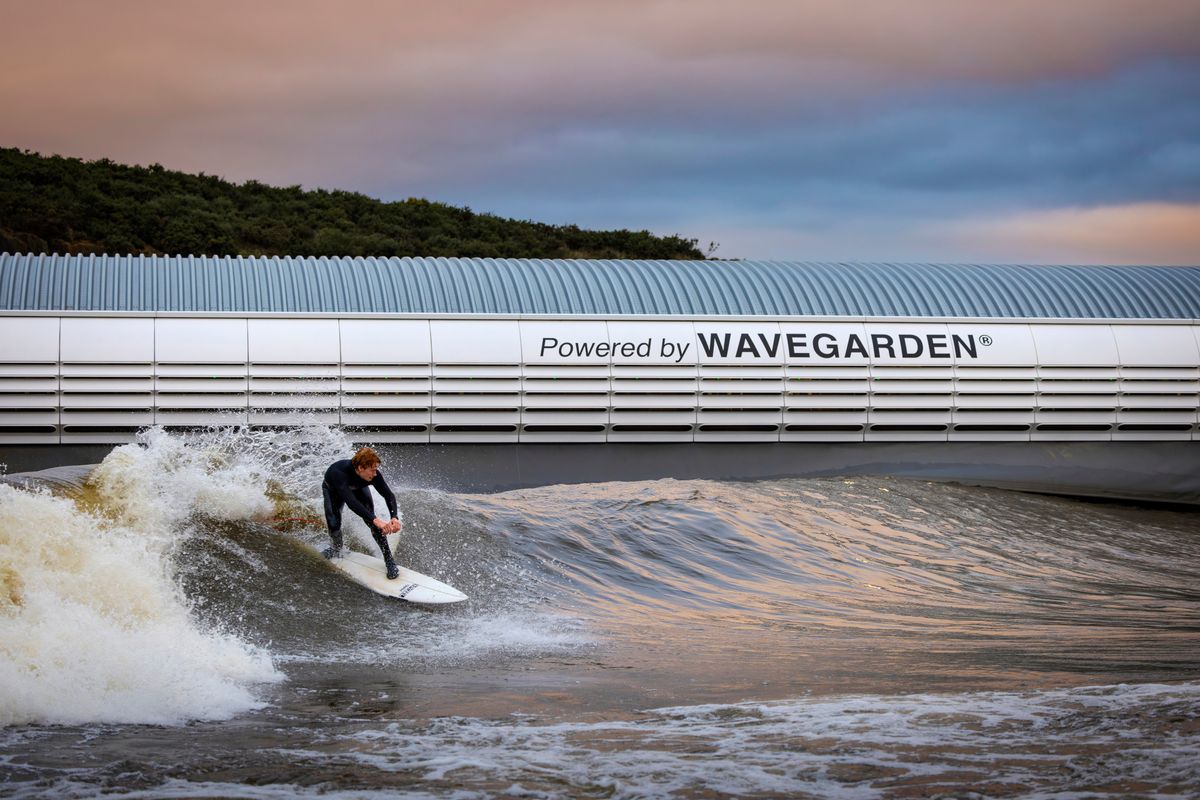
Lost Shore Surf Resort at Ratho, near Edinburgh
7. Johnnie Walker Experience
I’m always on the hunt to try something new, so when I heard glowing reviews from friends and family for the Johnnie Walker Experience, it really was a no brainer.
When I booked the Johnnie Walker Experience online, I filled out a flavour quiz. This would determine my personal flavour profile to tailor the tour to my tastebuds. Upon arrival, I was given a light pink wristband to make my very own whisky-based cocktail. I was matched with the ‘fruity’ cocktail which consisted of Johnnie Walker’s Black label whisky and soda water with a dehydrated orange for garnishing. Afterwards, we watched the origin story of Johnnie Walker brought to life by a talented actor – complete with moving whisky barrels. At the end of the tour, we sat down and were given the choice to choose two whisky cocktails. The room was filled with swirling aromas of the different whiskies available, combined with flavourful toppings and fruity mixers, it was an immersive experience for all the senses!
Sample whisky cocktails at the Johnnie Walker Experience
Johnnie Walker, Princes Street, Edinburgh
8. Camera Obscura and World of Illusions
No matter how many times I visit Camera Obscura and World of Illusions, I always feel like a big kid at heart! Situated in the Royal Mile and just next door to Edinburgh Castle, you’ll find five floors of fun, filled with optical illusions galore. I started off in the mirror maze with the neon lights adding to the madness of trying to find your way out. Next up was the vortex tunnel with the colourful lights playing with your mind and it felt like the room was spinning.
Other personal highlights for me were the floating head illusion and the room that makes you look like giants or very miniature versions of yourself. It is a one-way system throughout the attraction and you’re never short of photo opportunities either - the modern rooftop terrace gives you panoramic 360° views over Edinburgh’s old and new towns and beyond. There are also binoculars and telescopes that are free to use if you want an even closer look at the city.
Visit Camera Obscura & World of Illusions
Camera Obscura & World of Illusions
© Camera Obscura & World of Illusions
9. Palace of Holyroodhouse
At the opposite end of the Royal Mile from the castle is the Palace of Holyroodhouse - the King's official residence in Edinburgh. I went early afternoon to visit and included in my ticket was a free audio guide, which is also available in different languages. Since I had quite a bit of free time on my hands, I enjoyed a leisurely stroll which took me around an hour to explore the whole of the palace, including the towering surrounding trees, ancient abbey ruins, and the immaculate palace grounds. Although you can’t take any photos inside, it was such an eye-opening experience to see how grand everything was, from the tapestry to the incredible artwork on display.
Outside, you’ll find the ruins of the abbey and a monastery garden where monks once grew food and plants for medicinal purposes. There is even a sundial which is believed to have been there since the 1600s. The King’s Gallery also forms part of the Holyrood Palace complex with recurring exhibitions taking place throughout the year. Overall, it’s a lovely way to spend the morning or afternoon here and it’s filled to the brim with history.
Discover the Palace of Holyroodhouse
See what's on at the King's Gallery
The Palace Of Holyroodhouse
10. Dynamic Earth
Here’s a fun fact, Dynamic Earth was the first attraction I visited when I was a toddler. After a recent visit, it was lovely to take a trip down memory lane and relive some of my earliest childhood memories. Once you arrive, you’ll be allocated a time to watch the 360° planetarium dome show once you’ve made your way round the attraction. When the tour commences, prepare to step back in time on an interactive journey from the Big Bang right through to the present day. There are also plenty of exhibits that were great fun to get involved in including the rocket ride, the chance to touch a real iceberg and get a taste of rainforest life with animatronics replicating the movements and sounds of exotic animals.
Dynamic Earth
11. Barnton Bunker
If you’re looking to uncover a lesser-known side of Edinburgh’s history, I highly recommend the Edinburgh Nuclear Bunker. Curious to see what lay hidden beneath the city streets, I joined a guided tour of this former Cold War-era civil defence facility.
Exploring the preserved control rooms, communications centres and operational spaces, I was struck by how self-contained the bunker was. I found it unlike any other attraction I'd visited. Every room had a specific purpose, from monitoring radiation levels to coordinating responses across the country. The guides shared fascinating stories about its role during a potential national emergency and the people who worked there, known as the Royal Observer Corps (ROC). I was surprised to learn they were ordinary civilians – engineers, teachers, office workers, tradespeople – who volunteered and trained alongside their day jobs. I particularly enjoyed seeing the original equipment and learning how information would have been communicated during a crisis. While there's certainly a ghostly atmosphere underground, I found the experience captivating and thought-provoking.
Take a tour of Edinburgh Nuclear Bunker
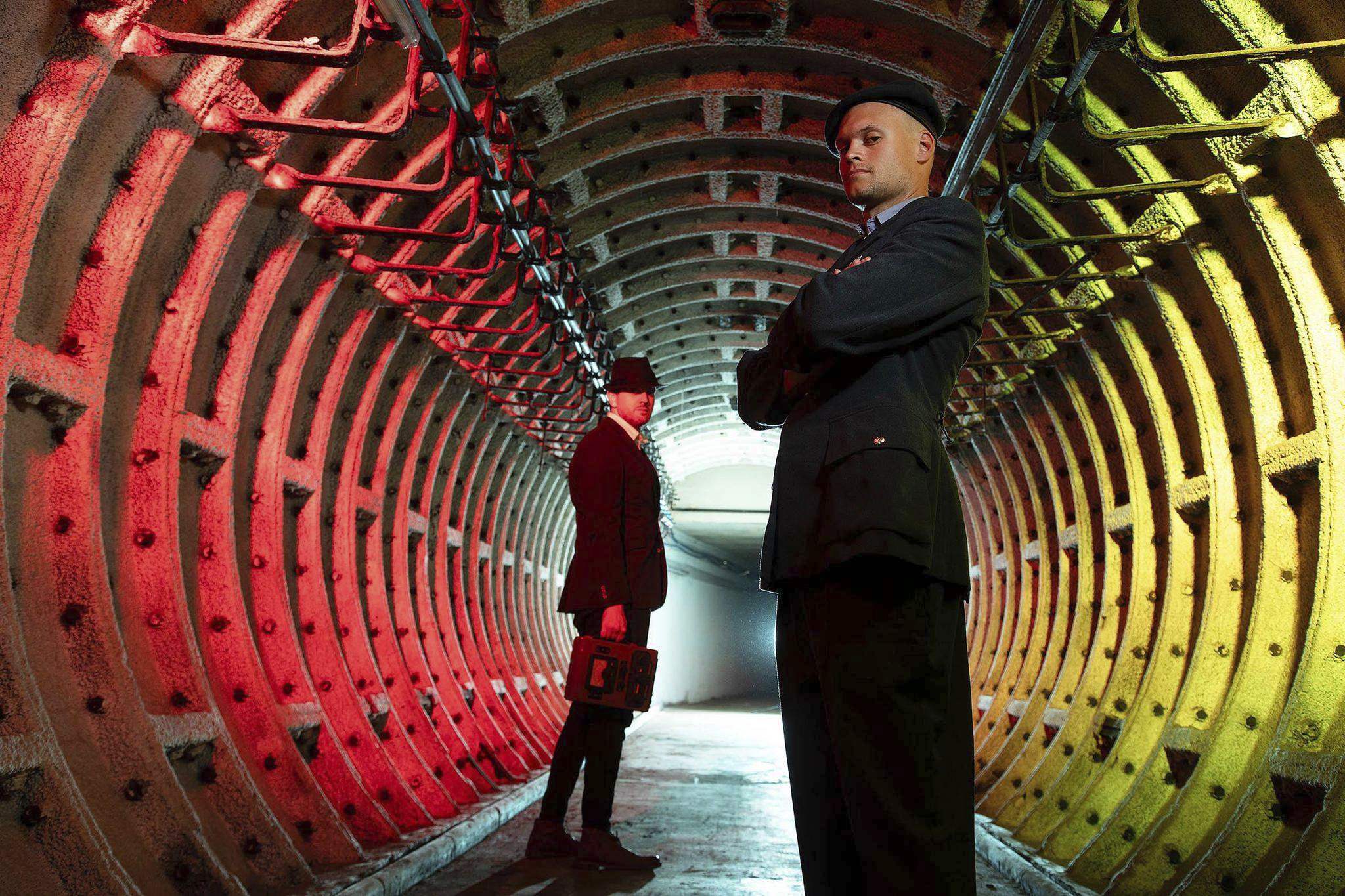
Barnton Bunker
© Barnton Bunker
This list was created by VisitScotland to showcase a range of experiences. It isn’t ranked in any specific order.