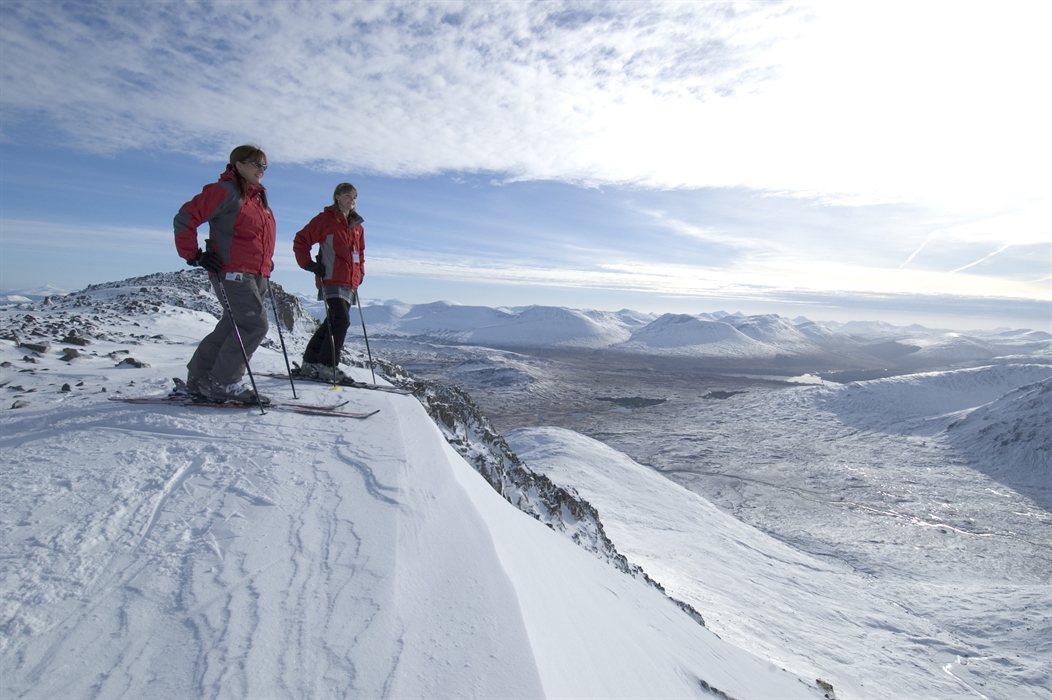
The area is a vast stretch of land composed of blanket bog, lochans, rivers, and rocky outcrops which makes it a very challenging environment which still supports varieties of flora and fauna. A wealth of plants, insect, bird and animal life can be seen here ranging from curlews and grouse to roe and red deer.
The best way to get a feel for this unique area is to take a train journey on the famous West Highland Railway as the railway line crosses the moorland for 23 miles and rises to over 1,300 ft.
For Outlander fans, Kinloch Rannoch was used as one of its filming locations. Possibly the most iconic Outlander locations, Kinloch Rannoch was used for the site of Craigh na Dun. It is here, in the very first episode, that Claire visits the stone circle and is thrown back in time to 1743. There she meets Captain ‘Black Jack’ Randall, a sadistic British officer, before being rescued by a passing highlander, Murtagh.
There is plenty of challenging and exhilarating walks in the remote hills and cycling routes. High mountains are also a feature of the moor although these are best left to experienced hillwalkers with excellent navigation skills. Lower level paths from the Rannoch Station area include a 9 mile linear tramp through to Corrour and Loch Ossian and also a 7 mile circuit of Loch Ossain.
There is a visitor centre at Rannoch Moor which showcases the beauty and interest of the moor - its evolution, early historical developments, flora and fauna and the importance of the railway to the area.