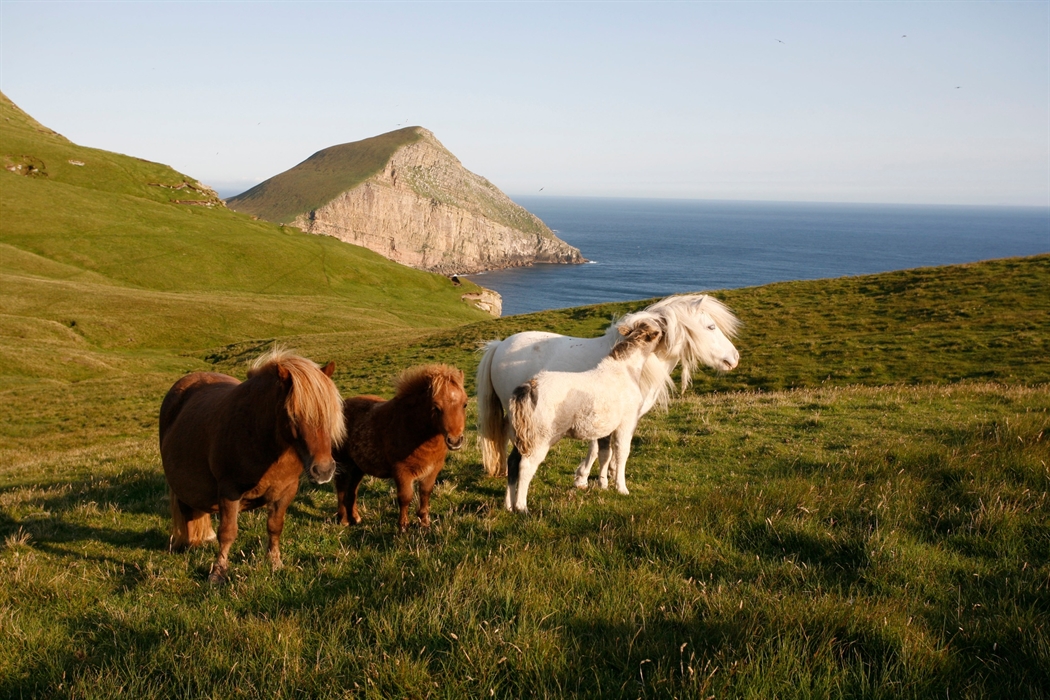
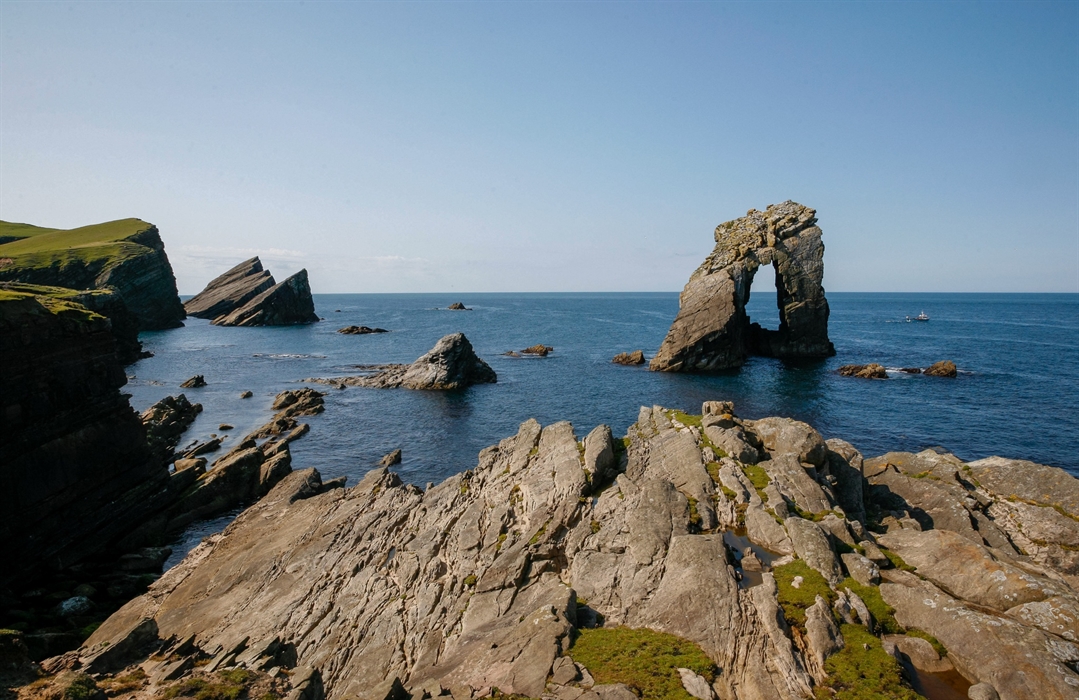
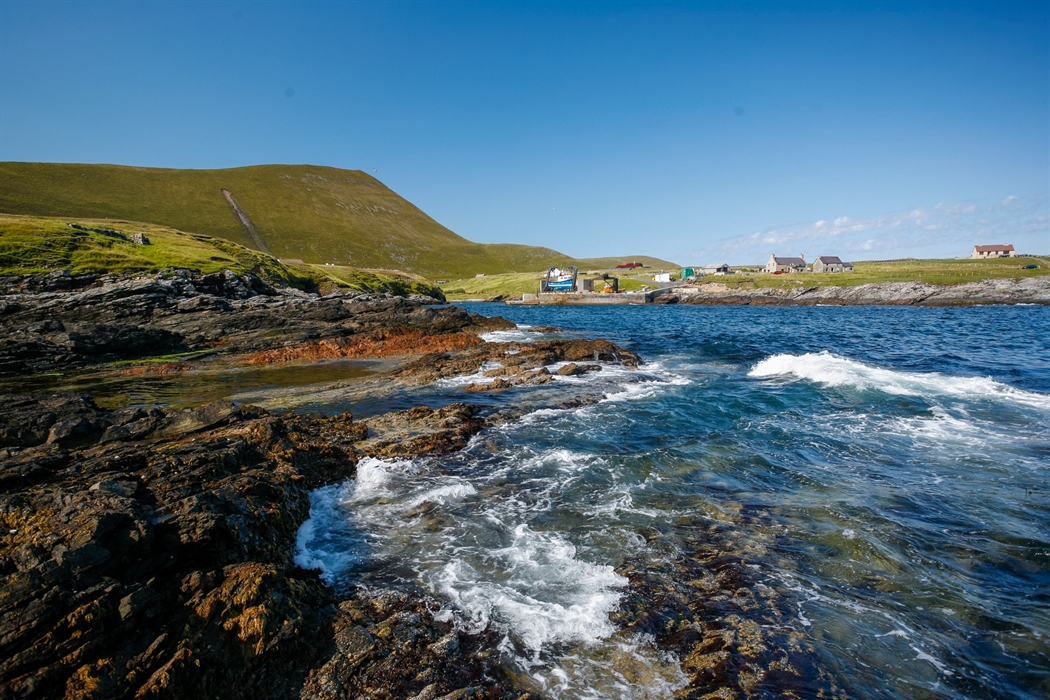
Foula is one of the most remote inhabited islands in the British Isles and lies 20 miles west of Mainland Shetland.
Foula has some of Britain's highest cliffs, reaching 1220 ft above sea level. The name Foula comes from the Old Norse for ‘bird island’. Inhabited since Neolithic times, the island is rich in historical significance and the community has a strong Norse tradition of folklore and music. There are great opportunities for birdwatching on Foula and the chance to join guided walks.
Papa Stour is a small rugged island off the west coast of Mainland Shetland and is popular with...
West Mainland is known for the amount of sunshine it gets, particularly in the summer months, and...
Burra & Trondra is a community of around 1,000 people, the islands being connected to Mainland...
St. Ninians Isle beach is a large tombolo (a natural sand causeway with sea on either side) on the...
South Mainland is the narrow peninsula that runs 25 miles south from Lerwick to Sumburgh.
Bressay lies east of Lerwick and is just a short ferry trip, while Noss is off the east coast of...
The busy fishing port of Scalloway, Shetland’s former capital, is the heart of Central Mainland, an...
West Voe Sands is located on the Southern tip of Shetland, right by Sumburgh Airport and the...
Lerwick, Shetland’s capital, has a strong fishing heritage and is famous for its annual winter fire...
Whalsay is an island with a strong fishing heritage and is half-an-hour by ferry from the east...
West Sandwick beach is a quaint white sand beach on the west coast of Yell.
Midway between Orkney and Shetland Fair Isle lies.
Yell is the largest of the Northern Isles and is part of the Shetland Islands.
Build your own itineraries by clicking the 'add to shortlist' button to add an item to your Itinerary basket.
For Accommodation and information, please call:
Open Mon to Fri: 0900 - 1700
Closed on Saturday & Sunday
*Calls may be recorded