The Outer Hebrides stretch for 130 miles and look out on their western side to the Atlantic Ocean.
Located on the very edge of Europe, Scotland’s Outer Hebrides offer a striking mix of landscapes. Heather-backed mountains overlook windswept golden sands, with dense areas of peat bog in between. Of the two hundred plus islands that make up the archipelago, only a handful are actually inhabited.
Lewis and Harris
Lewis and Harris form the northernmost island in the Outer Hebrides. Though they are actually part of the same land mass, they are thought of as different islands and each has its own distinctive culture, traditions and heritage.
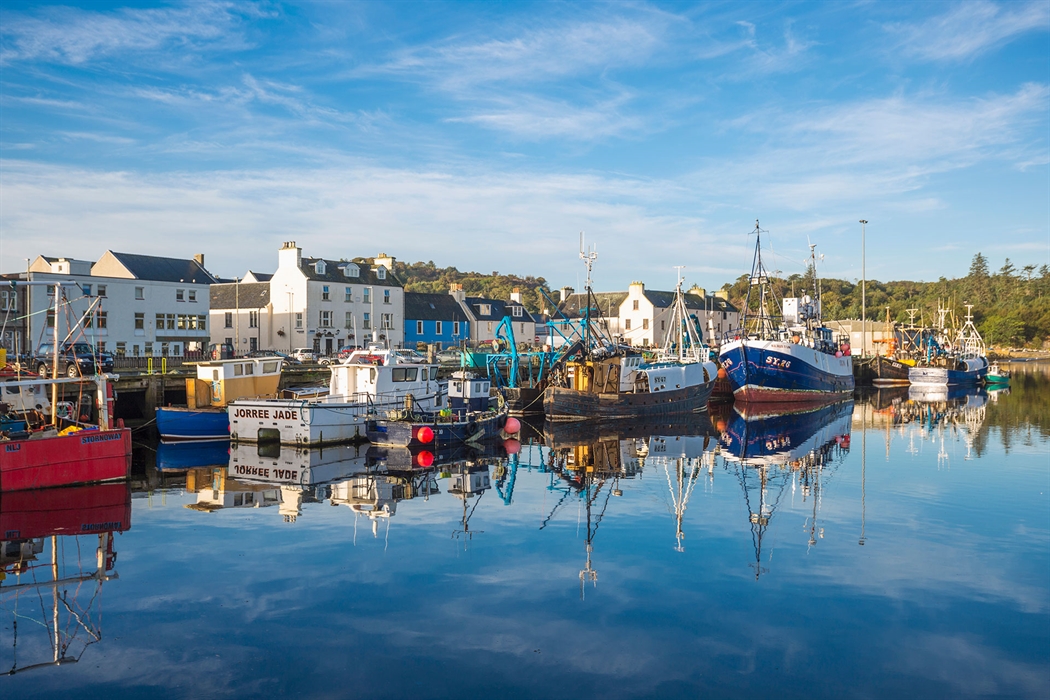
Lewis in the north is the largest island in the group and its main town of Stornoway is a busy centre of island life. Its natural harbour is a thriving fishing port.
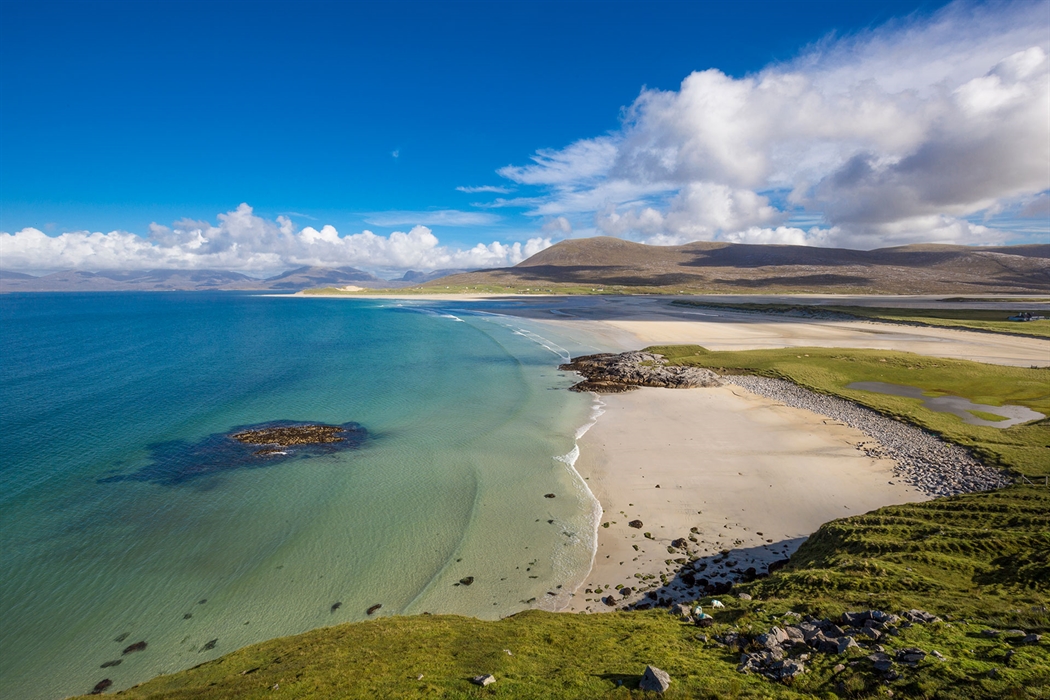
Harris is home to the world-famous Harris Tweed, which must be made on the islands to carry the name. Across a narrow isthmus from the more mountainous North Harris lies South Harris, with its wide beaches of golden sand trimming the Atlantic.
Find out more about Lewis, Harris and Stornoway
North Uist, Benbecula, South Uist and Barra
Further south still sit a string of small, flatter islands including North Uist, Benbecula, South Uist and Barra. Here stunning, breezy beaches are mostly bordered by a lower range of hills to the east. Uniquely, one of the beaches on Barra also doubles as a landing strip for flights from the mainland. It’s considered to be the only beach runway in the world to handle scheduled airline services.
St Kilda
Lying west offshore into the Atlantic, the remarkable deserted island of St Kilda is a dual World Heritage Site and a major attraction thanks to its amazing birdlife and fascinating history. The island can only be reached by day boat, which is subject to weather conditions and the permission of its owners, the National Trust for Scotland.
Heritage and culture
The Outer Hebrides remain a heartland of Gaelic culture, with the language spoken by over half of the islanders. The Celtic roots of the islands have permeated through to the arts created in this place, with traditional crafts and Celtic music still very much at the heart of Outer Hebridean culture.
History
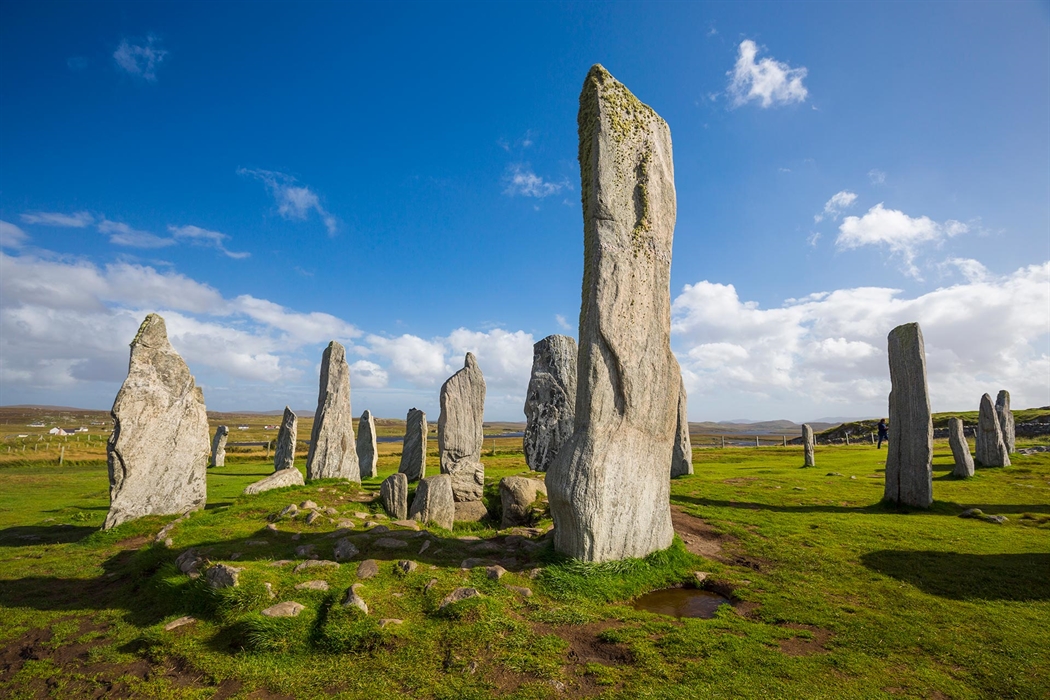
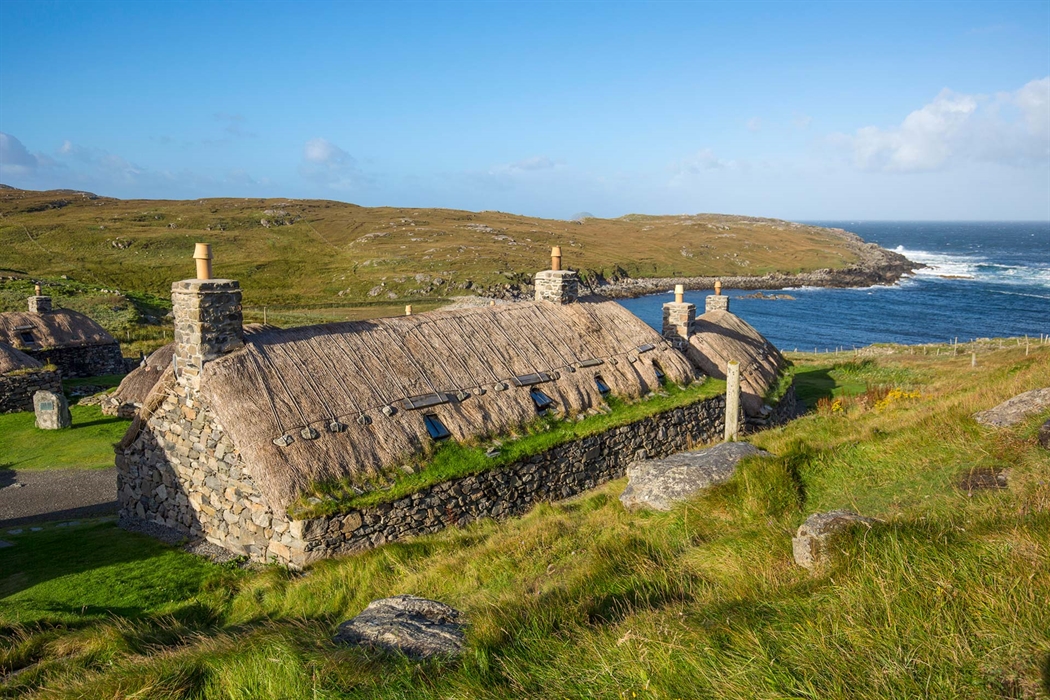
The famous Calanais Standing Stones on the Isle of Lewis are just the tip of the iceberg when it comes to the islands’ rich historical legacy. Dun Carloway, which is also on Lewis, is an Iron Age broch that stands at nearly seven metres tall and is around 2,000 years old.
Religion has long played an important role on these islands, with churches and church ruins dotted across the landscapes.
Activities
The landscapes of the Outer Hebrides makes it ideal for walking and cycling while the superb Atlantic beaches draw surfers from around the globe. Fishing for salmon and trout, as well as sea angling, is also highly popular. The clear Hebridean waters produce some of the best seafood in the UK.
Wildlife
Golden eagles, white-tailed eagles and corncrakes are just some of the amazing birdlife that you might spot from these islands, which are considered to be amongst the best bird-watching locations in Europe.
There are an estimated 4,000 red deer living on Lewis and Harris, so your chances of spotting one is pretty high, and the Outer Hebrides is also considered to be one of the best places in Europe to spot the European otter. Off the coast the marine life is pretty spectacular too, with porpoises, orca whales, minke whales and basking sharks all swimming off shore.