
Mennock Pass
Visit South West Scotland / Damian Shields
Driving in Scotland - Practical information
Check out our guide to driving in and around Scotland by car. Including useful FAQs and top tips for a smooth journey.
Planning your driving holiday around Scotland
How do I plan my driving route around Scotland?
Check your route before setting off and use the Traffic Scotland Route Checker for all the latest information on roadworks, traffic jams, accidents, weather conditions and other disruptions. Stay up to date while travelling with Traffic Scotland Radio.
RAC and AA Route Planners can also help you plan your own road trip and estimate journey times.
Remember to plan your parking in advance, as it can be limited at popular attractions such as national parks during the high season. Always park responsibly and make sure you don’t block access to passing places, emergency vehicles, farm machinery or access needed by residents. For local parking information, check the relevant council website before you travel.
If you need a bathroom break during your journey, use the interactive map to find nearby toilets open nearby you.
It is also a good idea to book your accommodation ahead of time, so you don’t have to drive around looking for somewhere to stay when you’re tired.
If you are camping, check which campsites are open and book in advance where possible. You should check whether you need a permit for your camping location and always follow the Scottish Outdoor Access Code.
St Abbs, Scottish Borders
Road trip itineraries
When touring Scotland by car, camper or bike, your route can vary in length. Get inspired by these epic itineraries.
Harry Potter Book & Filming Locations in Scotland
Feel the magic in the air as you follow Harry Potter’s footsteps on a 4-day itinerary from Edinburgh to the Highlands.
Highland castles itinerary
Step into Scotland’s story as you wander through mighty castles and breathe in the fresh Highland air over four days.
7 Days in the east of Scotland
Journey along Scotland’s spectacular east coast, home to dramatic cliffs, sweeping beaches, magnificent castles and intriguing attractions.
7 Days of iconic sightseeing in the west of Scotland
Vibrant city culture, stunning countryside, enchanting islands and coastline promise an unforgettable adventure.
Advice for driving in Scotland
Driving rules
- Always drive on the left-hand side of the road and follow the Highway Code while travelling in Scotland.
- Roundabouts are common in Scotland. Give way to traffic approaching from your right and keep left as you leave the roundabout.
- Seatbelts are compulsory for all drivers and passengers in the vehicle.
- Children must use an appropriate car seat until they are 12 years old or 135 cm tall (4ft 5 in). Children over 12 or more than 135 cm tall must wear a seat belt. You can order a car seat through the car hire company.
- It is illegal to use a hand-held mobile phone or any other device while driving, including while stopped in traffic. You must also have full control while using a hands-free device.
- If you're hiring a car in Scotland, make sure you know which documents and other requirements you'll need before you travel. It's also a good idea to familiarise yourself with the vehicle, especially if you're not used to driving on the left.
- Read the latest Highway Code before travelling for more detailed information about the driving rules, legal obligations and advice for road users in Scotland.
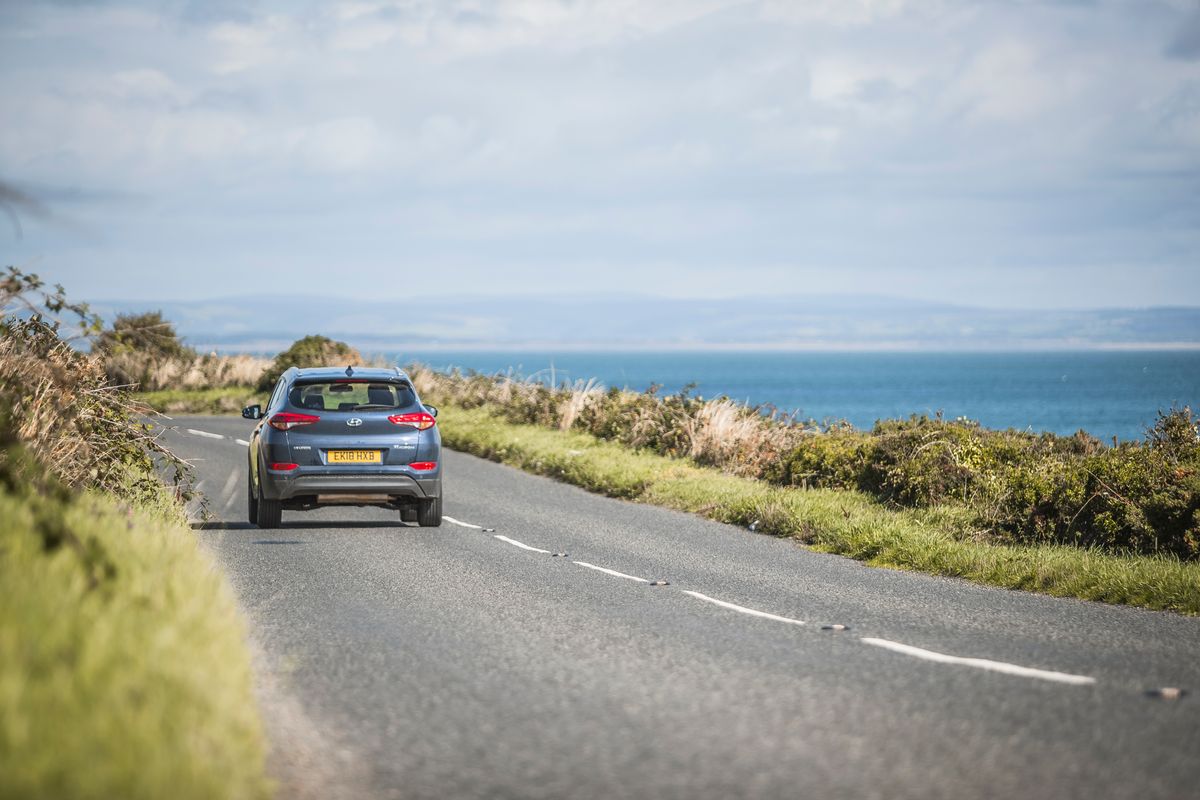
Der Solway Firth, Dumfries & Galloway
Scotland's classic touring routes
Plan to follow one of Scotland's classic touring routes. From rolling countryside to spectacular coastal roads, you'll find plenty of scenic stops along the way.
Borders Historic Route
Discover dramatic scenery, fascinating heritage and charming towns.
North Coast 500
Experience one of the world's great road trips along Scotland's spectacular North Coast 500.
North East 250
Roll down the windows and follow the sea breeze as you explore the North East 250, passing castles, charming towns and whisky experiences.
South West Coastal 300
Follow coastal roads, feel the sea breeze and uncover hidden gems as the South West Coastal 300 unfolds before you.
Driving safely and other road users
Roads and traffic in Scotland’s roads can change quickly so pay special attention to the following:
- Allow extra time during peak commuting hours, generally from 7.30-9.30 am and 4-6.30 pm.
- Some cities have bus lane restrictions. Check signs for operating times and permitted vehicles.
- Some main roads can be long and winding, which can make overtaking more difficult and increase journey times.
- You might encounter campervans, caravans and other large vehicles on routes to popular visitor destinations, especially during the summer. This includes narrow country roads.
- Give cyclists and motorcyclists plenty of space.
- Many single-lane country roads have passing places, where vehicles can pull over and let the oncoming traffic have right of way. These are sometimes referred as ‘pockets’ on the islands.
- Farm animals and wildlife may be on or near rural roads, so drive carefully and be prepared to slow down. Look out for deer crossing signs.
- Listen out for approaching emergency vehicles such as ambulances, fire engines, police or others using flashing lights, sirens or headlights and let them pass you safely on the road.
Der Treidelweg am Forth and Clyde Canal an der Auchinstarry Marina
FAQs: Everything you need to know about driving in Scotland
There are many ways to get around Scotland. If you are planning on driving in Scotland, read on for information about Scottish driving laws and regulations, answers to common questions and essential driving tips.