
Camping in the North West Highlands Geopark
VisitScotland / Airborne Lens
Wild camping in Scotland
Explore everything you need to know about wild camping in Scotland – from secret tent‑pitching spots to must‑know safety advice.
Top tips for wild camping in Scotland
- Pack smart. Bring warm layers, waterproofs, a headtorch, map/compass, and emergency snacks.
- Choose a low‑impact site on flat, dry ground. Avoid digging or moving stones/vegetation.
- Stay 30+ metres from water where possible.
- Keep group sizes small.
- Be considerate of locals. Avoid camping near homes. Ask permission if unsure.
- Respect wildlife and livestock. Keep dogs under control.
- Use a stove instead of an open fire.
- Toilet hygiene matters. Use public toilets when you can, otherwise bury waste responsibly.
- Take all litter home, including food scraps.
- Leave your camping spot exactly as you found it.
For more detailed info check out this handy Guide to wild camping in Scotland
Camping at Dalmellington
© VisitScotland / Luigi Di Pasquale
Fire safety outdoors in the Cairngorms
As the weather gets drier, the risk of wildfire in Scotland increases. Fire can ignite easily, spread fast and burn with high intensity. From 1 April until 30 September, fires and barbecues are banned across the Cairngorms National Park, with a maximum fine of £500.
What do we mean by “wild camping”?
Wild camping is lightweight, low‑impact camping on unenclosed land, well away from roads, buildings, and organised campsites. It usually means:
- Arriving on foot, bike or canoe
- Pitching late, leaving early
- One or two nights max
- Leaving absolutely nothing behind
It’s the simplest way to spend the night in Scotland’s landscapes – but must be done responsibly.
Wild camping laws & your rights in Scotland
Wild camping is legal, but it comes with responsibilities. Under Scotland’s Land Reform Act 2003 you have the right of responsible access to most land and inland water. This includes the right to wild camp on most unenclosed land as long as you follow the Scottish Outdoor Access Code and leave no trace.
Read our outdoor safety guide
Read the Scottish Outdoor Access Code
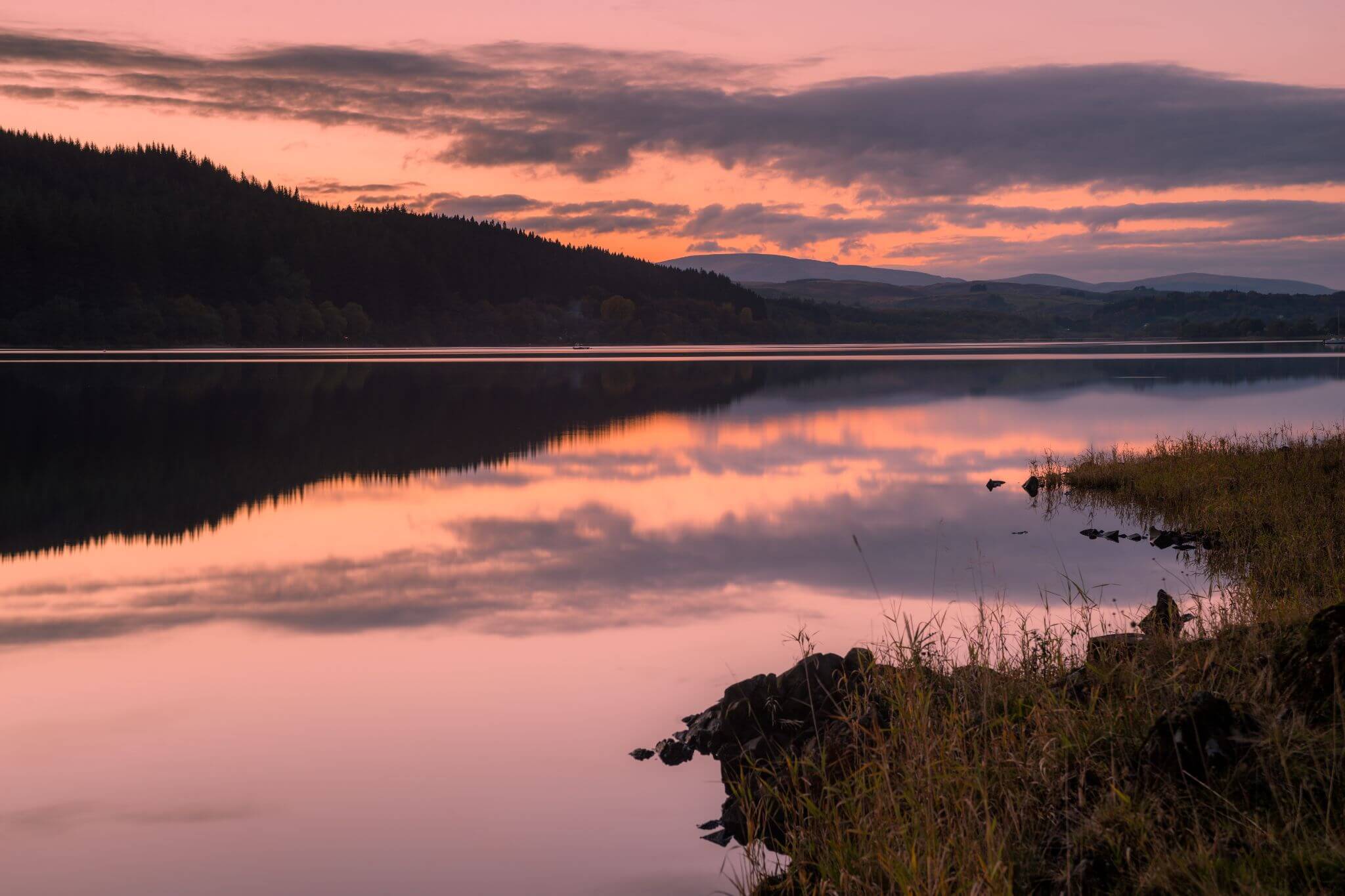
Loch Ken, Galloway Forest Park
Where can I camp?
You can usually wild camp on:
- Unenclosed, remote ground
- Hills, moorland, woods, and open countryside
You should avoid camping:
- In enclosed fields (especially with crops or livestock)
- Close to buildings or private gardens
- In busy hotspots already showing signs of strain
- Within 30+ metres of lochs, rivers or burns
If in doubt, ask the landowner — people are often happy to advise.
Some areas such as Loch Lomond & The Trossachs National Park are very popular and have additional rules. Certain busy areas operate wild‑camping byelaws, meaning you can only camp:
- In designated campsites
- Or with a valid camping permit
Glen Dye Cabins and Cottages in Banchory, Aberdeenshire
© VisitScotland / Luigi Di Pasquale
Wild camping vs organised camping — which is best?
Both are brilliant options, depending on who you are and how you like to explore.
Wild camping at Glentrool
© Forestry and Land Scotland
Wild camping is best for:
- Experienced campers
- Those travelling light (on foot, bike, canoe)
- People seeking a peaceful retreat in nature
- Adventurers comfortable with no facilities
Organised campsites are ideal for:
- First‑time visitors
- Families with young children
- Road‑trippers, car campers, motorhomes
- Anyone wanting toilets, showers, fire pits, or accessible pitches
Prefer a campsite?
Scotland has brilliant camping parks in incredible settings — a great choice for families, road trips, or anyone new to camping. Perfect if you want to be close to the beach or forest with access to working facilities.