
The Three Sisters, Glencoe
The Jacobite Rebellion
From bloody uprisings to tales of heroism, explore the history of the Jacobites in Scotland and where to retrace their footsteps.
Who were the Jacobites?
The Jacobites were historic supporters of King James VII, his son James Frances Edward Stuart, and his grandson, Charles Edward Stuart, also known as ‘Bonnie Prince Charlie’. They took their name from Jacobus, the Latin form of the name ‘James’, and their main aim was to restore the House of Stuart to the British throne, which led to the so-called Jacobite Risings.
‘Jacobite’ is Latin for James or Jacobus.

Uitzicht vanaf de Garry Bridge op de River Garry bij Killiecrankie
© VisitScotland / Kenny Lam
The Jacobite Risings: a timeline
From the first military action to their fateful end, retrace over half a century of Jacobite uprisings and campaigns throughout Scotland and beyond.
1689 - 1690
The first military conflict by the Jacobites was launched in 1689 against King William of Orange and his government forces at the Battle of Killiecrankie in Perthshire. The first Jacobite rising broke out, but popular support for a Jacobite war wasn’t forthcoming. This first conflict was followed by several bloody events, including the Siege of Dunkeld (1689) and the Massacre of Glencoe (1692).
1708 - 1719
In 1707, the kingdoms of Scotland and England were united, much to the dismay of those who supported the Jacobite cause. James VIII & III attempted to claim the throne twice, in 1708 and in 1715, which resulted in the Jacobite rising of 1715, culminating in the Battle of Sherriffmuir near Stirling. In 1719, the Jacobites formed an alliance with Spain and mounted a rebellion led by Lord Tullibardine and Earl Marischal, which resulted in the Battle of Glen Shiel near Glenfinnan.
The Jacobite Rebellion of 1745
After failing to persuade the French government to finance and participate in another invasion, Prince Charles decided to fund his own Jacobite rebellion. On the 22 June 1745, He sailed from France to Scotland, arriving on Eriskay in the Outer Hebrides in early July 1745. He then travelled across the Highlands to assemble a Jacobite army. On 19 August, he raised his father’s Standard at Glenfinnan, where the army gathered and the 1745 Jacobite Rising began.
Marching south, the Jacobites reclaimed Edinburgh without resistance less than a month later, emerging victorious at the Battle of Prestonpans in East Lothian four days later. Filled with confidence, the Jacobites then decided to continue their march south towards England instead of consolidating their grip on Scotland, eventually turning back after reaching Derby. On their way home, they fought against government forces at the Battle of Falkirk on 17 January 1746.
The last Jacobite uprising ended with the Battle of Culloden Moor on 16 April 1746, where the government forces crushed the Jacobites, worn out by a drawn-out campaign and harsh winter conditions.
The Ralston Memorial at the Pass of Glencoe
Het Glenfinnan Monument, Loch Shiel
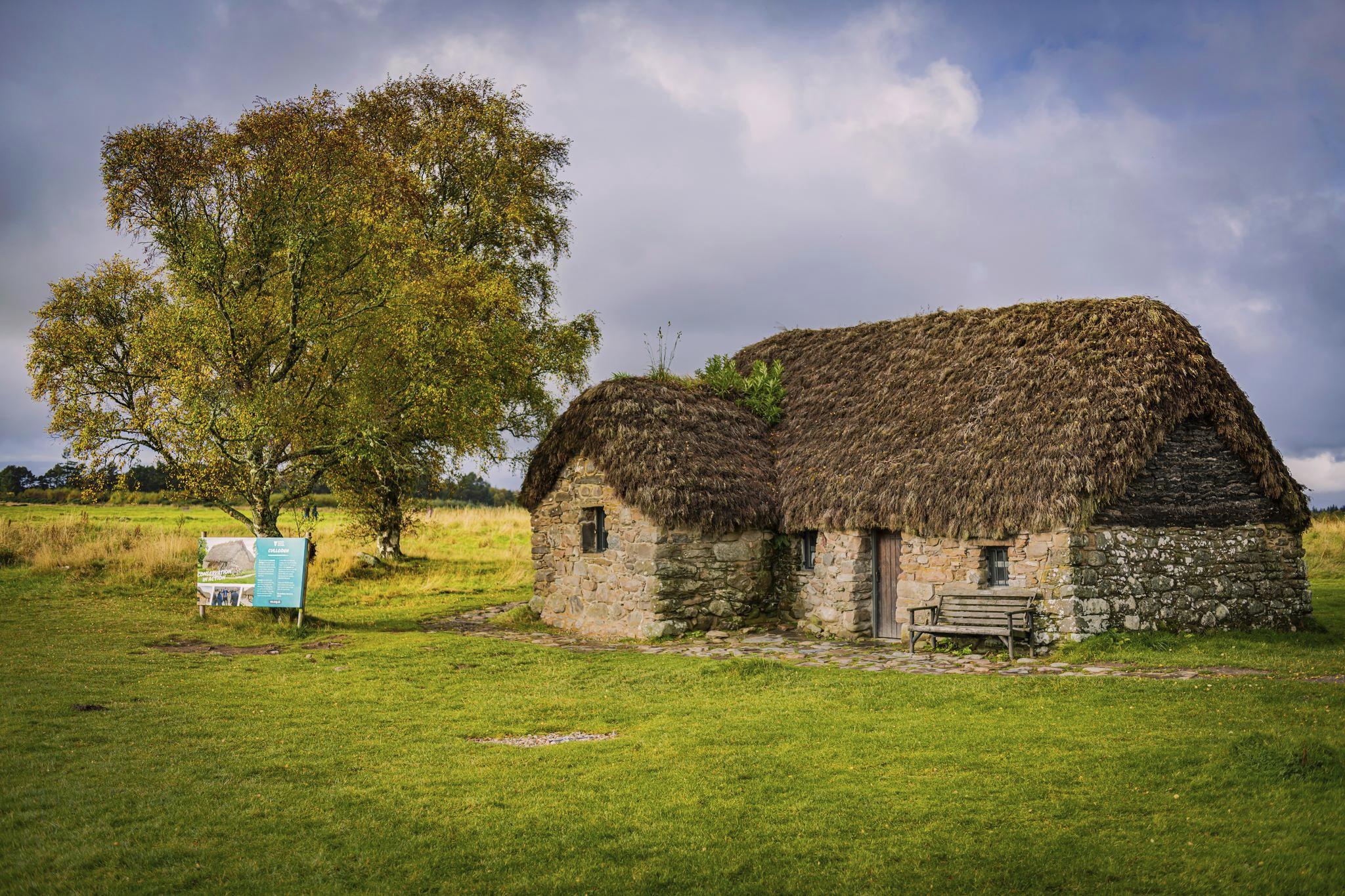
Cottage on Culloden Battlefield, Inverness
Where can I experience the Jacobites today?
Step into the story of the Jacobites and visit the places, museums and sites where you can immerse yourself in the events that have shaped the movement throughout Scotland.
Culloden Battlefield – a few minutes’ drive from Inverness, Culloden Battlefield and Visitor Centre takes you through the events that led to that fateful battle in April 1746. Delve into the battle experience, examine archaeological evidence from the site and walk across the battlefield, among the commemorative can stones and memorials.
Culloden House - Stay in the place where Bonnie Prince Charlie set up his battlefield headquarters, staying here for three nights before the doomed battle. Rich in history, the beautiful Culloden House is now a luxurious country house hotel.
Glenfinnan Monument - See the Glenfinnan Monument, dramatically set at the head of Loch Shiel in the west Highlands. In the visitor centre, discover the story of the '45 Rising and take in the impressive structure itself. Glenfinnan is the place where Charles rallied the clans loyal to the Stuart cause and started the final Risings.
Eriskay - The isle of Eriskay was the first place where Bonnie Prince Charlie set foot on Scottish soil and is where he started his campaign. These islands are also where he initially fled after the defeat at Culloden. From Eriskay to Benbecula and North Uist, follow the Bonnie Prince Charlie Trail through the Outer Hebrides while taking in some of Scotland’s unique seascapes.
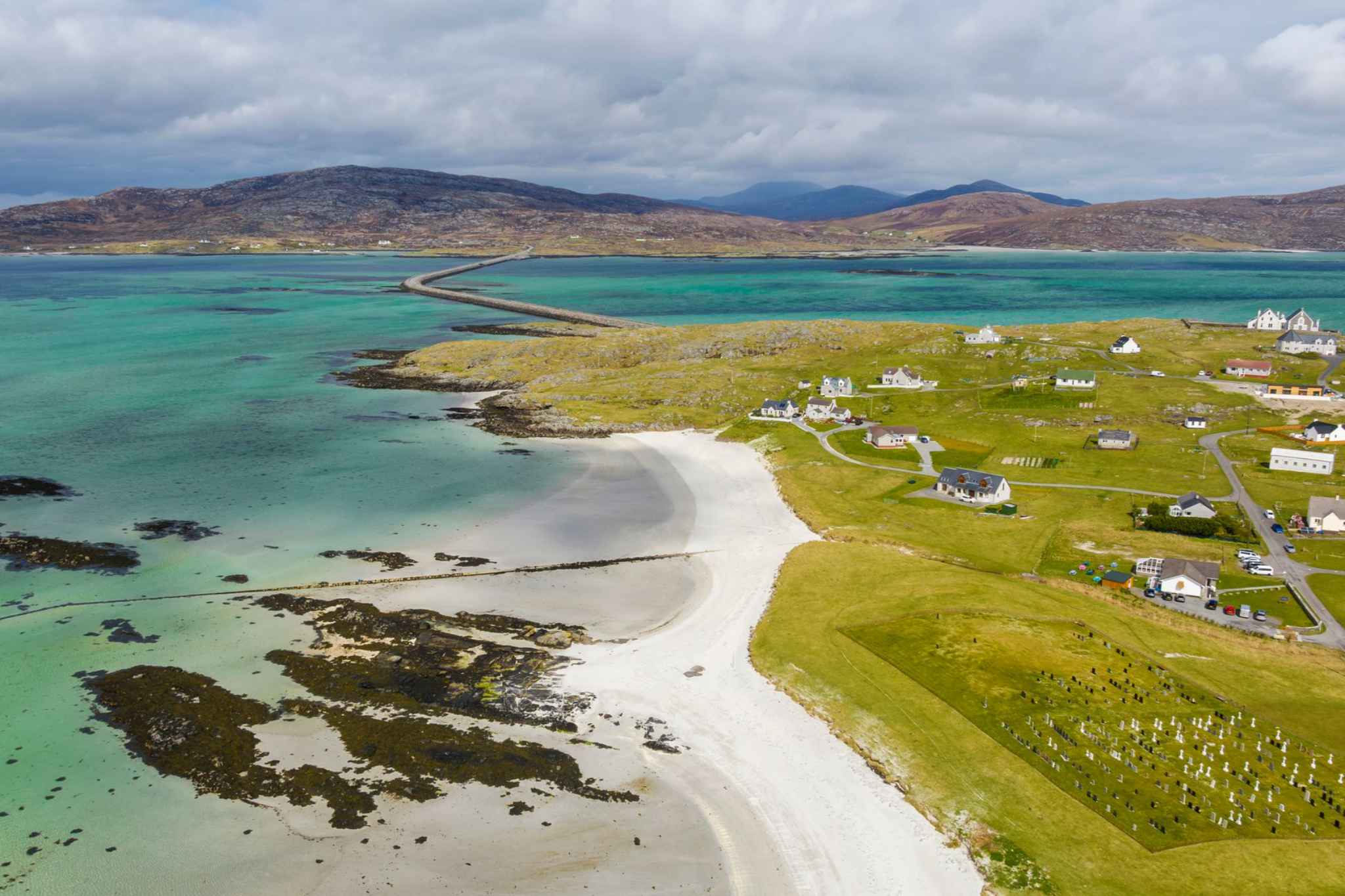
Prince's Beach, Eriskay
Callendar Estate – just outside Falkirk, wander through the wooded landscapes where the Battle of Falkirk Muir was fought 280 years ago and find out about key characters and events of the battle along a dedicated historical trail.
West Highland Museum – head to this quaint museum in Fort William to see a copy of Bonnie Prince's death mask, his sword, some of his clothing as well as other Jacobite artefacts.
Museum of Island Life - On the Isle of Skye, just behind the Museum of Island Life, lies a memorial to Flora MacDonald, the Jacobite sympathiser who helped Charles escape Scotland following the defeat at Culloden by disguising him as a maid and smuggling him away by boat.
Blairs Museum – just outside Aberdeen, Blairs Museum offers a fascinating glimpse into the people and stories behind the Jacobite movement in Scotland. The museum's collections include an important range of Jacobite portraits, relics and memorabilia connected to Bonnie Prince Charlie and the Stuart dynasty, spanning the era between 1715 and 1745. NOTE: the museum is temporarily closed.
Perth Museum - In addition to being the home of the legendary Stone of Destiny, Bonnie Prince Charlie’s sword and a rare Jacobite wine glass are also on public display in Perth Museum. It's the first time the sword has returned to Scotland since it was forged in Perth in 1739.