
Clan leaders at the Ballater Highland Games, Aberdeenshire
VisitScotland / David N Anderson
Scottish tartan and kilts
Bright colours, bold patterns and distinctive style – tartan is synonymous with Scotland all around the world.
Dive into the world of tartan and kilts
Whether you come across shops selling beautiful products with the famous tartan pattern on a stroll through the cobbled streets of Edinburgh or experience the unforgettable spectacle of a massed pipes and drums parade – kilts and tartan are a key part of Scottish culture and tradition.
What is tartan?
Tartan is a piece of woven cloth made up of horizontal and vertical stripes in different colours that are arranged on a coloured background. The pattern created by these interwoven stripes is known as a “sett”. Originally, clans used local plants, mosses, and berries to dye the wool, leading to softer colours. Today, modern dyes allow for even more variety and colours, with vibrant and unusual tartans adding to the over 7,000 unique tartans on record – even the Obamas and Hello Kitty have their own!
Tartan at a Radical Weavers exhibition, Stirling
What is a kilt?
Historically known as the feileadh-mòr in Gaelic (pronounced philamore), a kilt is a piece of tartan that is worn around the waist. A 'proper' kilt is usually accompanied with the following:
- A sporran – a small bag worn around the waist, over the kilt. Sporran is the Gaelic word for purse.
- A kilt pin – a heavy pin affixed to the outer flap of the kilt.
- A sgian dubh (pronounced skee-an doo) – a small dagger which sits in the sock.
It is very likely that you will come across a kilt or two on your journey to Scotland. From the pipers that are part of many traditional Highland games to tour guides who bring that extra bit of Scottish flair as well as football and rugby fans proudly sporting their national dress on match days, for many the kilt is synonymous with Scottish identity.
A pipe band at the Ballater Highland Games, Aberdeenshire
Experience kilts and tartan in Scotland
As you venture across Scotland, you’ll find museums, mills and shops where you can find out more about tartan. Hear the clattering of an old Harris loom, run your hands over soft scarves and cosy blankets and choose your perfect Scottish tartan souvenir.
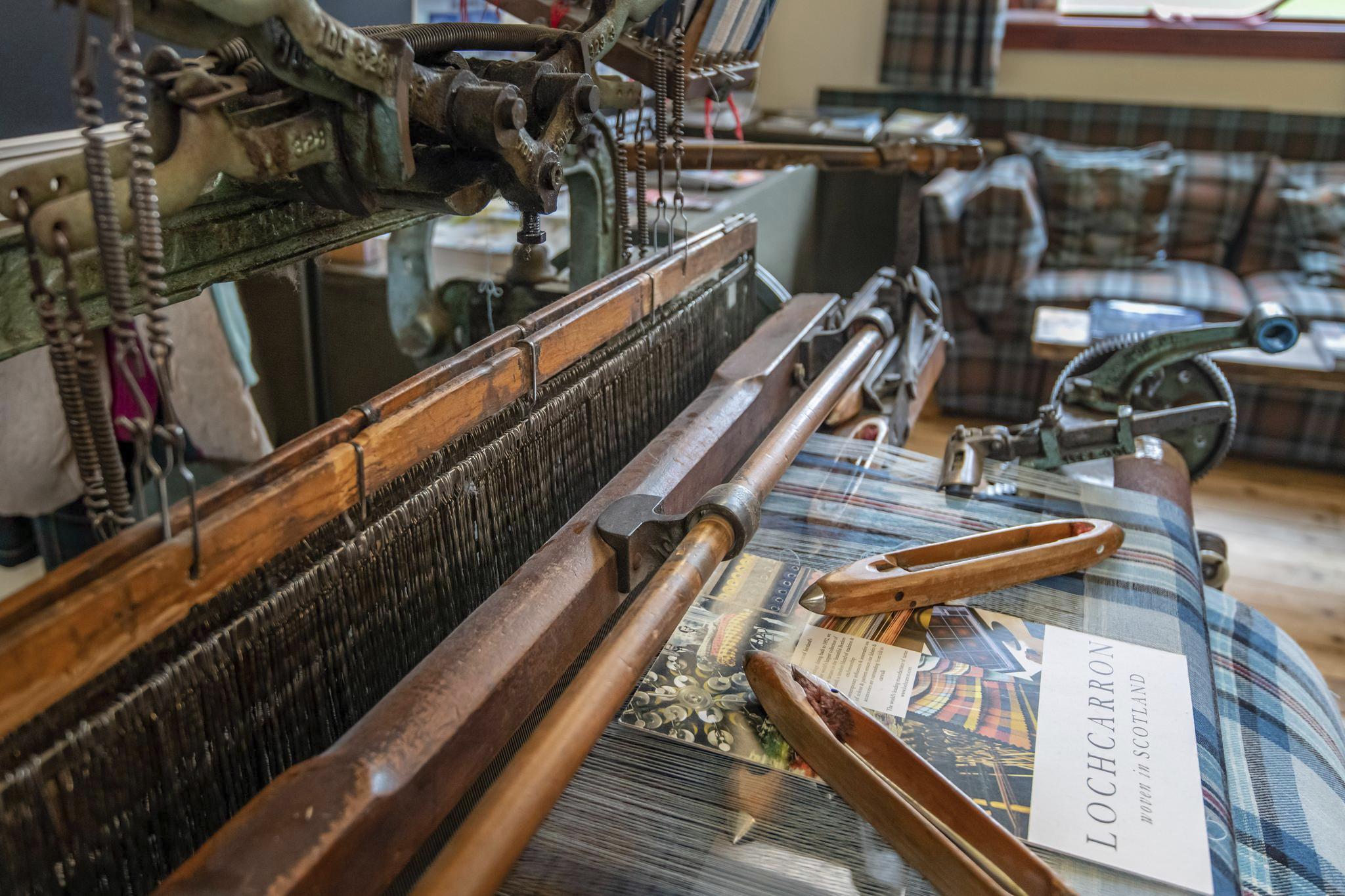
Lochcarron of Scotland, Scottish Borders
Visit this mill in Selkirk and explore a range of tartan designs and designer fabrics that have been used in everything from kilts to catwalks.
Harris Tweed Scotland, Outer Hebrides
This famed tartan design originated in the Outer Hebrides. Today, it's used in a range of bags, headwear, and accessories.
Auld Alliance Kiltmakers, Edinburgh
Meet a kiltmaker and explore the world of tartan and Scotland’s history with the fabric through engaging talks and workshops.
The Islander Workshop Experience, Edinburgh
Join a bag-making workshop and choose from Harris Tweed tartan to create your very own tartan bag.
Radical Weavers, Stirling
Design your own tartan and tell your story through a personal selection of colours and patterns with the help of an experienced tutor.
Islay Woollen Mill, Islay
Find beautiful souvenirs, from throws and scarves to caps and ties. Some of their designs have even been used in films like Braveheart.
What's the history of tartan?
Where did tartan come from?
Despite its close association with Scotland, the earliest sample of tartan was actually found in China and dates to around 3000 BC. Its Scottish roots run deep though, dating back to the third or fourth century. We’ve been using it to make kilts, bagpipes, rebellions, and fashion statements ever since.
JavaScript moet ingeschakeld zijn om deze video te bekijken. Je kunt dit inschakelen in de instellingen van je browser.
JavaScript moet ingeschakeld zijn om deze video te bekijken. Je kunt dit inschakelen in de instellingen van je browser.
Tartan Explained in Two(ish) Minutes
The Jacobite Rebellion
Fast forward a few centuries and we start to see tartan really exploding on the scene. Picture windswept romantics in the Highland countryside swathed in glorious Scottish tartan from head to toe. This is a popular conception of Scottish clans and their tartan, but it was the result of some clever Jacobite propaganda that’s added to myth and legend over the years.
Bonnie Prince Charlie, Scotland’s roguish Jacobite hero, arrived on Scottish soil fully clad in tartan in 1745, using fashion to draw together the ancient strength of the Scottish clans to fight for the throne. Although the Jacobite rebellion was ultimately unsuccessful, tartan became so powerfully interwoven with the idea of Scottish identity and rebellion that it was banned by the British Government following the Battle of Culloden in 1746.
Learn more about the Jacobites
Portret van Bonnie Prince Charlie, Scottish National Portrait Gallery
© Scottish National Portrait Gallery
Tartan, clans and revival
It wasn’t until the mid-1800s that tartan saw a revival with another epic branding campaign by none other than Sir Walter Scott. Sir Walter wanted clan chiefs to wear their clan tartans and full Highland dress when greeting King George IV during his hotly anticipated visit to Edinburgh in 1822. A great idea that had only one flaw: most of the chiefs were only just learning they were supposed to have clan-specific tartan. They rose to the occasion, submitting their 'official' clan tartans and cementing the link between clans and tartans firmly into history.
The campaign was a major success; King George was so taken with the fabric, he had a portrait painted of him as a Stuart prince, with a tartan kilt, socks, cape, and all. He passed this fascination and royal connection on to his niece, Queen Victoria, who made tartan the fashion statement it continues to be today.
Tartan today
Tartan isn’t just about the past; it continues to weave its story across Scotland and the globe.
It has always been at the forefront of modernity – the first ever colour photo was of a tartan ribbon, and it’s even travelled to space! Tartan is just as easily found on a high fashion runway and as part of school uniforms. In more recent years, some of the world’s biggest names in fashion have gravitated towards this fabric for its bold look and history of rebellion, from Chanel and Dior to Vivienne Westwood and Alexander McQueen.
Its uncanny ability to express tradition or undermine it – sometimes even at the same time – means it’s been powerfully adopted by causes and groups to represent their values and social conscience. Tartan is a fabulously diverse and playful material for everybody.
The Big Burns Ceilidh at the National Museum of Scotland, Edinburgh