:

  • English
  • Español
  • Italiano
  • Deutsch
  • Nederlands
  • Français
Navigation generated at 2026-2-8 13:48:21
    • Städte & Regionen sehen

      Städte

      • Städte sehen
      • Aberdeen
      • Dundee
      • Dunfermline
      • Edinburgh
      • Glasgow
      • Inverness
      • Perth
      • Stirling

      Beliebte Orte

      • Ben Nevis
      • Glencoe
      • Loch Lomond
      • Loch Ness

      Kleinstädte in Schottland

      • Kleinstädte in Schottland sehen
      • Aviemore
      • Dumfries
      • Fort William
      • Kirkwall
      • Lerwick
      • Oban
      • Peebles
      • Pitlochry
      • St Andrews

      Inseln

      • Inseln sehen
      • Arran
      • Islay
      • Jura
      • Lewis & Harris
      • Mull
      • Die Orkney-Inseln
      • Die Äußeren Hebriden
      • Die Shetland-Inseln
      • Skye

      Regionen

      • Aberdeenshire
      • Argyll & The Isles
      • Ayrshire & Arran
      • Dumfries & Galloway
      • Dundee & Angus
      • Edinburgh & die Lothians
      • Fife
      • Greater Glasgow & das Clyde Valley
      • Loch Lomond, die Trossachs, Stirling & das Forth Valley
      • Die Highlands
      • Perthshire
      • Die Scottish Borders
    • Aktivitäten & Attraktionen sehen

      Attraktionen & Sehenswürdigkeiten

      • Attraktionen & Sehenswürdigkeiten sehen
      • 20 Top-Sehenswürdigkeiten
      • Kunst & Kultur
      • Burgen & Schlösser
      • Kostenlose Attraktionen
      • Geschichte & Kulturerbe
      • Museen & Galerien
      • TV- & Filmdrehorte

      Outdoor-Aktivitäten

      • Outdoor-Aktivitäten sehen
      • Radfahren
      • Angeln
      • Golf
      • Reiten
      • Mountainbiking
      • Wandern & Wanderurlaube
      • Wassersport

      Essen & Trinken

      • Essen & Trinken sehen
      • Bier & Brauereien
      • Schottischer Gin
      • Whisky & Destillerien

      Landschaft & Natur

      • Landschaft & Natur sehen
      • Strände
      • Ben Nevis
      • Seen
      • Nationalparks
      • Polarlichter
      • Steinkreise
      • Tierwelt

      Touren, Routen & Trails

      • Touren, Routen & Trails sehen
      • Inseln & Inselhopping
      • Reisevorschläge
      • Schottlands UNESCO Trail
      • Touren durch Schottland
      • Wanderwege

      Events & Festivals

      • Events & Festivals sehen
      • Festivals in Edinburgh
      • Highland Games
      • Musikfestivals
    • Unterkünfte sehen

      Hotels & Unterkünfte

      • B&Bs & Pensionen
      • Günstige Hotels
      • Hostels & Jugendherbergen
      • Hotels
      • Luxushotels
      • Gasthöfe & Restaurants mit Zimmern

      Wohnmobil & Camping

      • Wohnmobil & Camping sehen
      • Wohnmobil & Wohnwagen
      • Glamping
      • Wildcamping & Zelten

      Ferienhäuser & Ferienwohnungen

      • Ferienhäuser & Ferienwohnungen sehen
      • Blockhütten & Lodges
      • Cottages
      • Ferienwohnungen & Apartments
      • Mit Whirlpool
      • Unterkünfte für Gruppen

      Ungewöhnliche Unterkünfte

      • Ungewöhnliche Unterkünfte sehen
      • Burgen & Schlösser

      Weitere Unterkünfte

      • Barrierefreie Unterkünfte
      • Umweltfreundliche Unterkünfte
      • Luxusunterkünfte
      • Hundefreundliche Unterkünfte
      • Romantische Unterkünfte
    • Reisen & Planen sehen

      Anreise nach Schottland

      • Aus England & Wales
      • Aus Deutschland, Österreich & der Schweiz

      Reisen innerhalb Schottlands

      • Flugzeug
      • Bus & Fernbus
      • Fähre
      • Zug

      Autofahren in Schottland

      • Autofahren in Schottland sehen
      • Mietwagen
      • Roadtrips in Schottland
      • Elektroauto

      Die beste Reisezeit für Schottland

      • Die beste Reisezeit für Schottland sehen
      • Frühling & Ostern
      • Sommer
      • Herbst
      • Winter, Weihnachten & Silvester

      Praktische Informationen

      • Nachhaltiger Tourismus
      • Häufig gestellte Fragen
      • CO2-Rechner für Ihren Urlaub
      • Rabatte & Angebote
      • Reisepässe, Visa & Zoll
      • Wetter

      Anregungen & Ideen

      • Sicherheit im Freien
      • Reiseblog
      • Reise-Newsletter

      Urlaubsarten

      • Barrierefreie Urlaube
      • Die schönsten Orte
      • Günstige Urlaube
      • Ländliche Urlaube
      • Urlaub mit der Familie
      • Urlaub auf dem Bauernhof
      • Alternative Reiseziele
      • Solo Travel
      • Kurzurlaube
      • Wellness
  • Schottlandkarte

BETA: Die Suche und die Karte sind neue Funktionen, für die weitere Verbesserungen geplant sind. VisitScotland ist nicht für den Inhalt externer Links verantwortlich und übernimmt keine Haftung für deren Verwendung.

Ihr Feedback hilft uns bei der Verbesserung der Webseite
  1. Startseite
  2. Aktivitäten & Attraktionen
  3. Events & Festivals

9 Iconic events & the history behind them

Looking for an event that’s uniquely Scottish? Or do you know one, but  always wondered how it became a part of Scottish culture?  We delve into the history of iconic Scottish events so that next time you visit Scotland you can enjoy them on an even deeper level.


The Wallace Monument

© VisitScotland / Kenny Lam

Burns Night

A piper piping in the haggis at a Burns Night Supper

On 25  January, people in Scotland come together to honour the life and work of our literary hero, Robert Burns. We celebrate with a Burns Supper, which combines a tasty meal of our iconic (and delicious) haggis, and a series of readings from Burns’ work.

Every Burns Night is celebrated slightly differently, but it all began when a group of Burns’ friends got together at his old cottage to mark the fifth anniversary of his death. They must have thought it was a good night, as they decided to form a society and repeat the event six months later, on his birthday.

There were some initial hiccups - such as having the wrong date for Burns' birthday - but from 1803 onward, the society has held a Burns Supper every year on 25 January. The original Burns Society was so popular, that more and more people heard about the Burns Suppers and created their own. Nowadays, Burns night is celebrated by many in Scotland and across the world. It’s a great night if you like food and literature! 

Learn more about Burns Night.

Scottish Gas Murrayfield Stadium, home to Scottish rugby.

Six Nations

The Six Nations, both the men’s and the women’s rugby tournament, takes place every year from the first weekend in February and culminates five weeks later on Super Saturday. The first tournament kicked off in 1883 and featured the then four home nations of the UK: England, Ireland, Scotland and Wales. France and Italy joined later on in 1910 and 2000 respectively. Every nation plays each other once, resulting in a tournament with a total of 15 matches.

But rugby itself only became a sport in the UK in the 19th century. Until the 1860s, rugby and football were basically the same sport with everyone running and kicking the ball around. It’s thought this original game started all the way back in Scotland and England in the Middle Ages when entire villages would play against each other. People tried to get a ball, usually made from a pig’s bladder, to the opposing village’s cemetery gates. It was known as a ‘mock war’ and wasn’t uncommon for there to be injuries or even fatalities!

In 1871, a game of modern rugby was played between England and Scotland in Edinburgh (which Scotland won). This led to about 12 years of occasional friendly matches between the home nations, after which the Home International Championship, the precursor to the Six Nations, was played in 1883.

Come to Scotland and cheer your favourite team on! You’re always welcome to join the supporters and lively atmosphere in one of Scotland’s many bars and pubs showing the games.

If you want to see something more like the historic version of rugby in action, check out the Kirkwall Ba’. This event takes place in Orkney every year on Christmas and New Years’ Day, and combines the old rules with a much more gentle play!

Learn more about rugby in Scotland

St Andrews Day Celebrations

© Fife Council / Ryan Edy

St Andrew's Day

Cookies werden benötigt, um dieses Video abzuspielen

JavaScript muss aktiviert sein, um dieses Video abzuspielen. Sie können es in Ihren Browser-Einstellungen aktivieren.

Bild: The Wallace Monument

© VisitScotland / Kenny Lam

St Andrew’s Day has been a bank holiday in Scotland since 2007, honouring Scotland’s patron saint on 30 November every year. There are a variety of events held to mark the day across the country, but why is the 30th so important, why Andrew of all saints, and what does it have to do with the Scottish flag?

Let’s start with the date. In the 11th century, the old pagan festival of Halloween was still important for many Scots, because it was a major festive reminder for farmers to move their cattle from the pastures into the stables for winter. King Malcolm III tried to replace this pagan celebration with a Christian one by instructing farmers to bring their cattle in about a month later on St Andrew’s Day. As an apostle of Jesus who was famously martyred on a diagonal cross, Andrew was one of the more well-known saints. However, aside from a mass in his honour on 30 November, the day wasn’t that special yet.

Next up, the saint. It wasn’t until 300 years later during the First Scottish War for Independence (1296–1328), that the Scottish nobles declared that Saint Andrew would be Scotland’s official patron saint. Saint Andrew had been growing in popularity for the past three centuries, but only from 1320 was he officially Scotland's chief saint.

Lastly, the flag. You might already know that our saltire is also called the flag of Saint Andrew or that it depicts Saint Andrew’s cross. So, you might also think that after declaring Andrew to be Scotland’s patron saint, the Scots used the flag with his cross to charge into battle. But this wasn’t the case. The flag wasn’t used until after the war, at a border skirmish at Otterburn in 1388.

St Andrew’s Day has taken on new dimensions since the Middle Ages. From a simple date to replace Halloween, we now celebrate our bank holiday with festivals or a nice traditional ceilidh. Come and experience it yourself, and see the saint’s flag proudly fly on flagpoles across the country.

Despite King Malcolm’s best efforts to make people forget about the pagan festival, Halloween is still a big day in Scotland which many of our quirky traditions surviving. 

Learn more about  St Andrew’s Day

Largs Viking Festival

© Ayrshire and Arran Tourism Group

Largs Viking Festival

At the port town of Largs on the stunning coast of Ayrshire, a festival takes places every year to remember the last great battle between the Scots and Vikings. The festival has been held since 1980 at the end of August/beginning of September in order to preserve the Viking link with Largs.

Experience how history comes to life at the Largs Viking Festival with the reading of the Saga of Haakon Hákonarson, who was King of Norway, Orkney, Shetland and the Hebrides, and hear of how he tried to defend his realm from King Alexander III of Scotland.

Have fun with the whole family at the Scottish Food and Craft Fayre, the Viking Village, the Labyrinth and more. There are normally various musical performances, as well as a torchlit parade that ends with the burning of a Viking longship and a spectacular fireworks display.

Learn more about the  Largs Viking Festival

Fireworks at Edinburgh's Hogmanay Street Party

Hogmanay

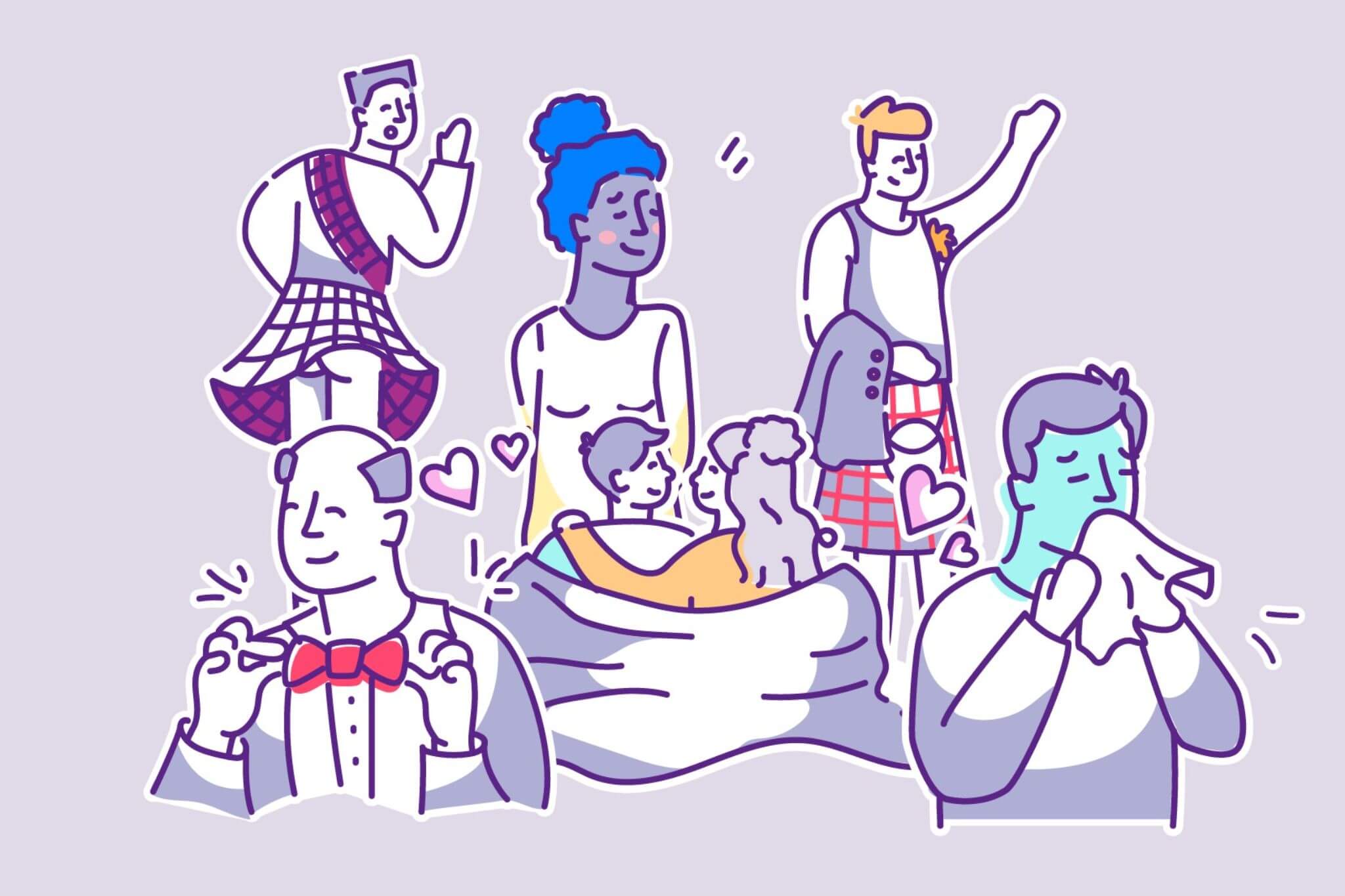
In Scotland, we celebrate Hogmanay (New Year’s Eve) with spectacular fire festivals as well as a couple of unique customs, traditions, fireworks, ceilidhs and live music. In short, Hogmanay is not just the Scots word for New Year, it’s a completely unique celebration. But where does it come from?

Nobody knows for sure, but we have some pretty good clues:

  • The word ‘Hogmanay’ only exists in Scots, a language derived from a northern dialect of Old English.
  • Hogmanay is a fire festival that marks an important moment on the calendar and is only celebrated in Scotland and the North of England, places where people used to speak this dialect of Old English.
  • Fire festivals are usually Celtic celebrations to mark important moments on the calendar. On Halloween at the start of autumn, or Beltane at the start of spring, the ancient Celts for example used bonfires to symbolically purify people and livestock and to ward off fairies and other evil spirits.
  • There are no Celtic winter fire festivals on the British Isles.
  • Hogmanay takes place around the same time as Yule, the Viking new year, which is not a fire festival.

So, what do all of these clues tell us? Well, there used to be a kingdom, the Kingdom of Northumbria, in the Middle Ages that stretched along the North Sea from the Firth of Forth all the way south to the River Humber. Its people, a mix of Anglo-Saxons, Celts and Viking rulers, spoke the northern dialect of Old English. It’s quite common that when people mingle, cultures mingle too. And when the Vikings celebrated Yule, which is one of the biggest events in the Viking year, it got infused with elements from Halloween and Beltane, which are two of the biggest events in the Celtic year.

Fairies play an important role in both Celtic celebrations, and they used to for Hogmanay, too. The name for the festival is thought to come from the Old English word Hoghman, which translates to ‘hill man’ or ‘fairy’. So Hogmanay would mean something like ‘feast of fairies’, and could very well be a Viking-Scots version of Yule and Halloween mixed together.

One tradition from Viking times that we still do today in Scotland at Hogmanay is ‘first-footing’. For the ritual, a dark-haired man needs to be the first person to visit you in the new year for good luck. The implication is that, in the Middle Ages, a fair-haired man who entered your house first would have been a Viking raider. 

One of the most spectacular features of Hogmanay are our impressive annual torch parades in Edinburgh on the night of 30 December, and those in Biggar, Combrie and Stonehaven on Hogmanay itself.

Plan your Hogmanay
Up Helly Aa

Up Helly Aa

Ever since the 19th century, the people of Shetland have been celebrating their Norse heritage every year by parading through their town centres as Vikings and by setting fire to a longship. Afterwards, locals and visitors alike alike gather to continue their party by dancing in one of the town’s many charming pubs and restaurants until deep into the night.

Shetland was a part of Norway until 1469, but the Up Helly Aa celebration is unique to the islands. It’s not celebrated anywhere else in Scandinavia or in other former Viking areas. If anything, this wintry fire festival seems to have more similarities with the other Celtic fire festivals on mainland Scotland, such as the Stonehaven Fireballs.

Nevertheless, when the first Up Helly Aa parade was held in Lerwick in 1881, it was intended as a celebration of Shetland’s Norse heritage. More Viking elements, such as the burning of the longship, were added in later years. Every community on Shetland organises their own Up Helly Aa, each of which is slightly different. There are 11 in total, taking place between January and March and attracting thousands of visitors every year.

Marvel at the fire parade and party all night with Vikings. The first Up Helly Aa of the year is the Scalloway Fire Festival (second Friday of January) while the largest celebration takes place in Lerwick (final Tuesday of January). There is also the Delting Up Helly Aa (third Friday of March) which roughly takes place around the time that the first puffins return to Scotland for the summer.

Discover Up Helly Aa

Pipe band marching, Ballater Highland Games.

© VisitScotland / David N Anderson

Highland Games

Cookies werden benötigt, um dieses Video abzuspielen

JavaScript muss aktiviert sein, um dieses Video abzuspielen. Sie können es in Ihren Browser-Einstellungen aktivieren.

Bild: Caber toss at the Bridge of Allan Highland games

Every year, people in Scotland watch competitors test their strength and endurance against each other at different gatherings all over Scotland. The first games of the year take place in Gourock in May, but the season peaks in July and August with events right across the country, before coming to a close in September.

Legend has it that King Malcolm III called the first ever Highland games in the 11th century, and asked the clans’ fastest runners to race to the summit of the Craig Choinnich near Braemar. The winner would become his new personal courier, making the first ever gathering an elaborate and challenging job interview!

Every gathering is unique, but modern Highland games are usually overseen by a chieftain and feature music, dance and athletic competitions, such as the famous caber toss, hammer throw and track and field events. Some games even let spectators compete in certain simpler events, so you can join the games in Scotland, too!

Learn more about the  Highland games and how you can organise your own in the back garden.

Whisky tasting at Cragganmore Distillery

© Cragganmore Distillery / Jakub Iwanicki

World Whisky Day

World Whisky Day  sounds like it’s a century-old institution, just like whisky itself. But it’s actually pretty new! It takes place every third Saturday in May and is celebrated worldwide, as the centrepiece of Scotland’s Whisky Month.

World Whisky Day was founded in 2012 by Blair Bowman, a student of Hispanic Studies at the University of Aberdeen. Bowman, already a whisky enthusiast, did part of his studies in Spain where he discovered how much people abroad loved the drink. Surprised that there wasn’t an international day for whisky at the time, he decided to create one and it was a worldwide success from the start.

Celebrate World Whisky Day and Whisky Month in Scotland. Enjoy some of the fun events and tastings taking place and learn more about the history and the creation of the drink with an inspiring distillery tour.

Learn about World Whisky Day

The Beltane Fire Festival

© VisitScotland / Kenny Lam

Beltane

This traditional Celtic festival heralds the beginning of summer and takes place on 30  April, roughly halfway between the Spring Equinox and Midsummer. It originated amongst the Goidelic Celts of Ireland and is even older than the Roman conquest of Britain. Once celebrated all over Scotland, it's now mostly known for the spectacular fire show on Edinburgh’s Calton Hill. Beltane used to have an important religious and social function. The bonfires at Beltane symbolised the return of summer when communities got together, partied and drove cattle round the fires to purify themselves and their livestock.

Organised by the Beltane Fire Society to rekindle Celtic traditions and reconnect people to nature, the festival on Calton Hill is a revival of ancient traditions and has taken place every year since 1988. Why not experience it yourself? Enjoy the parade, featuring the May Queen, the death and rebirth of the Green Man, and the lighting of the bonfire.

Maybe you’re already familiar with Beltane from the film The Wicker Man (1973). The festivities and ritual at the film’s climax are a very, very loose adaptation of the festival. But don’t worry, there are no sacrifices at the actual Beltane festival! 

Experience Beltane

Teilen über

Facebook
Pinterest
WhatsApp
Twitter
E-Mail

Was Ihnen auch gefallen könnte

Kategorie: Aktivitäten

Events & festivals in Scotland

Kategorie: Aktivitäten

18 Braw Scottish words & their meanings

Kategorie: Aktivitäten

Outlander filming locations in Scotland

Kategorie: Aktivitäten

Historic attractions in Scotland

Kategorie: Aktivitäten

Fun outdoor activities in Scotland

Werden Sie Mitglied in unserem Newsletter-Clan

Finden Sie Inspirationen aus Schottland direkt in Ihrem Posteingang. Verpassen Sie nichts mehr von unseren Schottlandexperten zu aufregenden Reiseideen, einmaligen Attraktionen und den Lieblingsorten der Einheimischen.

Abonnieren Sie den Schottland-Newsletter

Kontaktieren Sie uns

  • Kontaktieren Sie uns
  • Feedback & Beschwerden

Unsere anderen Webseiten

  • Geschäftliche Veranstaltungen
  • Business Support Hub
  • Reisevertrieb
  • Bilderdatenbank
  • Unternehmen
  • Scotland is Now

Find us on

Find us on

  • Über uns
  • Barrierefreiheit
  • Richtlinien zur akzeptablen Nutzung
  • Cookies
  • Umweltkonzept
  • Datenschutz
  • Soziale Medien
  • Nutzungsbedingungen
Brand Scotland

© 2026 VisitScotland. All rights reserved.