:

  • English
  • Español
  • Italiano
  • Deutsch
  • Nederlands
  • Français
Navigation generated at 2026-2-13 2:30:41
    • All Places to go

      Cities

      • All Cities
      • Aberdeen
      • Dundee
      • Dunfermline
      • Edinburgh
      • Glasgow
      • Inverness
      • Perth
      • Stirling

      Popular Places

      • Ben Nevis
      • Glencoe
      • Loch Lomond
      • Loch Ness

      Towns

      • All Towns
      • Aviemore
      • Dumfries
      • Fort William
      • Kirkwall
      • Lerwick
      • Oban
      • Peebles
      • Pitlochry
      • St Andrews

      Islands

      • All Islands
      • Isle of Arran
      • Isle of Islay
      • Jura
      • Lewis & Harris
      • Mull
      • Orkney
      • Outer Hebrides
      • Shetland
      • Skye

      Regions

      • Aberdeen & Aberdeenshire
      • Argyll & The Isles
      • Ayrshire & Arran
      • Dumfries & Galloway
      • Dundee & Angus
      • Edinburgh & The Lothians
      • Fife
      • Glasgow & Clyde Valley
      • Loch Lomond, Trossachs, Stirling & Forth Valley
      • Highlands
      • Perthshire
      • Scottish Borders
    • All Things to do

      Attractions

      • All Attractions
      • 20 Top Attractions
      • Ancestry
      • Arts & Culture
      • Castles
      • Free Attractions
      • History & Heritage
      • Museums & Galleries
      • Rainy Days
      • TV & Film Locations

      Outdoor Activities

      • All Outdoor Activities
      • Cycling
      • Fishing
      • Golf
      • Horse Riding
      • Mountain Biking
      • Sailing
      • Ski & Snowsports
      • Walking & Hiking
      • Watersports

      Food & Drink

      • All Food & Drink
      • Beer & Breweries
      • Gin Tours & Tastings
      • Whisky & Distilleries

      Landscapes & Nature

      • All Landscapes & Nature
      • Beaches
      • Ben Nevis
      • Lochs
      • National Parks
      • Northern Lights
      • Standing Stones
      • Wildlife Watching

      Tours, Routes & Trails

      • All Tours, Routes & Trails
      • Islands & Island Hopping
      • Itineraries
      • Scotland's UNESCO Trail
      • Tours
      • Walking Trails

      Events

      • All Events
      • Edinburgh's Summer Festivals
      • Highland Games
      • Music Festivals
    • All Accommodation

      Hotels & Lodgings

      • B&Bs & Guesthouses
      • Budget Hotels
      • Hostels
      • Hotels
      • Luxury Hotels
      • Restaurants with Rooms & Inns

      Caravan & Camping

      • All Caravan & Camping
      • Campervan, Motorhome & Caravan Holidays
      • Glamping
      • Wild Camping

      Self Catering

      • All Self Catering
      • Cabins & Lodges
      • Cottages
      • Flats & Apartments
      • Hot Tubs
      • Large Groups

      Unique Places

      • All Unique Places
      • Boats, Barges & Boathouses
      • Brochs & Blackhouses
      • Castles
      • Churches

      Other Accommodation

      • Accessible Accommodation
      • Eco Accommodation
      • Exclusive Use Venues
      • Luxury Accommodation
      • Pet Friendly Accommodation
      • Romantic
      • Wedding Venues
    • All Travel & planning

      Travel to Scotland

      • From England & Wales
      • From Europe
      • From Ireland
      • From North America
      • From Other Continents

      Travel in Scotland

      • Air
      • Bus & Coach
      • Ferry
      • Train

      Driving in Scotland

      • All Driving in Scotland
      • Car Hire
      • Driving Routes
      • Electric Vehicles

      When to visit

      • All When to visit
      • Spring & Easter
      • Summer Breaks
      • Autumn Breaks
      • Winter, Christmas & New Year

      Practical Information

      • Eco-Travel
      • FAQs
      • Holiday Carbon Calculator
      • Passes & Offers
      • Passports & Visas
      • Weather

      Ideas & Advice

      • Outdoor Safety Information
      • Travel Blog
      • Travel Newsletter

      Holiday Types

      • Accessible Holidays
      • Beauty Spots
      • Budget-Friendly Holidays
      • Countryside Breaks
      • Family Holidays
      • Farm Stays
      • Off the Beaten Track Holidays
      • Solo Travel
      • Weekend Breaks
      • Wellness Retreats
  • Map of Scotland

BETA: The search and map are new features with further enhancements planned. VisitScotland is not responsible for the content of external links and accepts no liability for any reliance on these.

Your feedback will help improve the site
  1. Home
  2. Things to do
  3. Outdoor Activities
  4. Walking & Hiking
  5. Walking the bones of Scotland

Walking the bones of Scotland

Christopher Somerville
5 minutes• June 12, 2024

In his new book, author Christopher Somerville traces the 3 billion-year-old story of Britain’s geology and its effect on our history, landscape and outlook. Christopher’s journey through Scotland takes him from the ancient gneiss, peat moors and stone circles of the Isle of Lewis to the geological treasure chest of the Berwickshire coast.

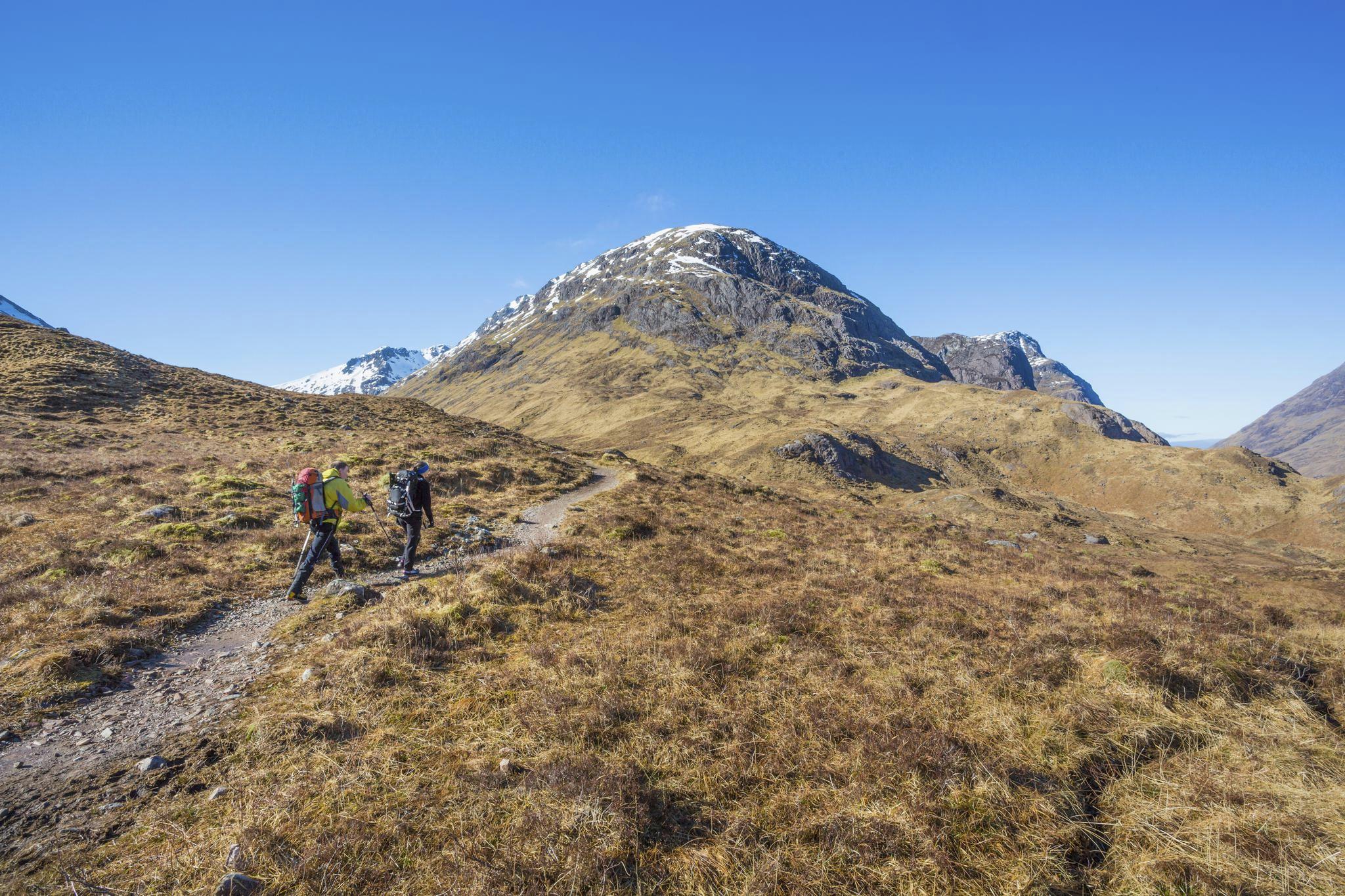
A Hillwalker at the summit of Beinn Eighe National Nature Reserve

Our geological story

Christopher Somerville

Christopher Somerville

© Jane Somerville

“

I came to see that what lies beneath our boots, the rocky bones of Britain, has shaped everything I love about the country.

A bright spring morning in the Isle of Lewis, outermost corner of the Western Isles. On the pristine sands of Tolsta Bay I contemplated a riot of strikingly coloured cliffs and sea-stacks of ancient rock known as gneiss, as naked and contorted as when they first formed in the nascent earth’s crust 3,000 million years ago. This was the first step of a journey by foot and ferry across the geological history of Britain, all the way from these most ancient rocks to the youngest, a thousand miles away on the muddy Essex shore.

I used to think of geology as baffling and boring, a stew of technical terms about a pile of dusty old rocks. But after forty years of exploring every corner of these islands on foot, I came to see that what lies beneath our boots, the rocky bones of Britain, has shaped everything I love about the country – its wonderful shapes and colours, its curves and hollows, the dramatic cliffs and subtle lowlands, the way we build and farm and make our livings, our ongoing story through smooth and troubled times. I made up my mind to string together a line of paths that I could walk from end to end of the country, learning our geological story as I went along.

Walking through Scotland

Mangersta Sea Cliffs on the Isle of Lewis

Mangersta Sea Cliffs on the Isle of Lewis

© VisitScotland

You can’t walk through Scotland without bumping into ancient volcanoes and the sites of catastrophic asteroid hits, great rips in the body of the land, old rocks that mysteriously sit on top of younger ones, rocks that have been melted and squashed out of recognition. It’s as though the land has been through a giant blacksmith’s forge or a monstrous lemon squeezer. It has certainly shifted up and down the globe, thousands of miles apart from what would become England until the two land masses crunched together some 400 million years ago.

The Quiraing, Isle of Skye

My path led me through Lewis and Harris, then across to the Isle of Skye and the spectacular basalt curtain that hangs from the spine of the Trotternish peninsula, a formation younger by some 2,700 million years than the rocks I’d admired on Lewis less than 100 miles away. These enormous mental leaps became a feature of the walk, but even so I often found myself confounded by the great swathes of deep time involved. Who can really imagine the passing of even a million years, let alone 3,000 million?

Abandoned boat on Loch Eil at Corpach with Ben Nevis seen beyond

Unimaginable spans of time

“

I sat on the Coigach shore... and felt the tingle of connection with life in all its forms emergent over unimaginable spans of time.

Over on the mainland I made my way north of Ullapool to follow a geological trail round the coast of the Coigach peninsula. Here some 1,200 million years ago an asteroid half a mile wide slammed into the planet at 25,000mph. A smear of rough-textured red rock at the site still shows how the collision liquefied and splattered the sandstone far and wide, like pancake batter. And here not long afterwards, in what was still a barren, lifeless world, stromatolites or primitive single-celled forms of life began to cluster and prosper, spreading oxygen around the globe to help kickstart life on Earth. I sat on the Coigach shore beside the layers of finely leaved limestone rock that the stromatolites built up, watching an otter playing on the cliff and smelling the sun-warmed heather, and felt the tingle of connection with life in all its forms emergent over unimaginable spans of time.

Further south in rainy Wester Ross I followed an old cattle droving trail east through the squashed and metamorphosed sand, mud and silt that shaped the rugged and remote mountains of Glen Quoich some 500 million years ago. After that came the massive split in Scotland’s body that formed the Great Glen around 400 million years ago, the same era as the petrified violence of the volcanic landscapes of Ben Nevis (its summit views miraculously clear of cloud) and Glencoe. Last kick of the fire and fury of that early world was felt in the heart of Edinburgh as I climbed the pluton or column of basalt that forms Arthur’s Seat, iconic landmark for miles around.

The human element

Winter solstice at Ring of Brodgar

© Orkney.com

“

The process of deposition, uplifting and erosion of rocks must have taken place over uncountable years, what we now call ‘deep time’.

As for the human element – I found that connections between mankind and the rocks that underpin their land resonated throughout my journey through the bones of Britain. Men of Lewis laboriously split and shaped their ancient iron-hard gneiss to fashion the Callanish stone circle 5,000 years ago. Skye drovers walked the black cattle from the harsh environment of the volcanic isles to the sweet grass and shelter of the mainland. Miners dug coal and ironstone out of the Kelvin valley, ‘good men doing a rotten job tae the best o’ their ability,’ as one of them testified. And everywhere the gneiss and basalt, sandstone and limestone lies exposed in everyday use, built into the walls of houses and byres, piled up along field boundaries and crunching under the wheels of cars and lorries.

In the 18th century most thinkers accepted, if not quite wholeheartedly, that God had created the world in a short space of time and had laid the rocks in neat layers like a celestial brickie, fixing the oldest at the bottom and the youngest at the top. But James Hutton, a Scottish farmer, mineralogist, chemist and pioneer geologist, begged to differ.

Pettico Wick Bay

On the Berwickshire coast path close to the English border I came to Siccar Point on a rainy evening. It was here on a June day in 1788 that Hutton, studying the cliffs, saw how horizontal layers of red sandstone lay directly on top of much older rocks that had been levered upright by massive forces under the ground. It confirmed what he’d begun to suspect – that the process of deposition, uplifting and erosion of rocks must have taken place over uncountable years, what we now call ‘deep time’. Furthermore, it was, and still is, a cyclical process, unspooling then, now and for all time.

James Hutton struggled to get his theory widely promulgated during his lifetime. It’s taken two centuries to accomplish, but it’s good to know that our whole modern geological understanding rests on the insight of this bright, inquisitive, persistent Scot.

Christopher Somerville is Walking Correspondent of The Times and author of over 40 books. His long-running ‘A Good Walk’ series appears every Saturday in the Times Weekend section. 

Find out more about the author

Scotland's geological wonders

Interested in exploring the geological history of Scotland? Explore some of the Scottish locations in Christopher Somerville’s new book Walking The Bones of Britain.

Lewis & Harris

Discover Lewis and Harris, with holiday ideas, accommodation, travel information, maps and things to see and do.

Isle of Skye

Skye is a truly magical place. The largest of the Inner Hebrides, it's home to some of Scotland's most iconic landscapes.

Ullapool

Visit the picturesque fishing town of Ullapool.

Wester Ross Biosphere

This natural playground in the north west Highlands has beautiful beaches, gleaming lochs, centuries-old pinewoods, deep glens, and lofty mountains.

Glencoe and Kinlochleven

Follow a dramatic route through one of Scotland's most spectacular and notorious glens where Scotland's most infamous massacre took place.

Ben Nevis

Discover Ben Nevis, Scotland’s iconic peak and the highest mountain in the UK, known as “the mountain with its head in the clouds”.

Edinburgh

Explore the wealth of historic and modern wonders in Scotland's capital city.

The Scottish Borders

Discover the Scottish Borders region, including holiday ideas, accommodation, travel information and insider tips.

Share on

Facebook
Pinterest
WhatsApp
Twitter
Email

Other things you might like

Category: Things to do

Walking in Scotland

Category: Things to do

Ben Nevis

Category: Things to do

Scotland's landscapes, scenery & nature

Category: Things to do

The best hiking trails in Scotland

Category: Things to do

9 Alternative must-climb hills to Ben Nevis in Scotland

Category: Things to do

A guide to outdoor safety in Scotland

Join our Newsletter Clan

Get Scotland inspiration direct to your inbox. Don't miss the inside track from our Scotland experts on exciting trip ideas, unique attractions and hidden gems loved by locals.

Get the Scotland newsletter

Get in touch

  • Contact us
  • Feedback & Complaints
  • Submit an event

Our other sites

  • Business Events
  • Business Support Hub
  • Travel Trade
  • Asset library
  • Corporate
  • Scotland is Now

Find us on

Find us on

  • About us
  • Accessibility
  • Acceptable use
  • Cookies
  • Environmental policy
  • Privacy
  • Social media
  • Terms of use
Brand Scotland

© 2026 VisitScotland. All rights reserved.