:

  • English
  • Español
  • Italiano
  • Deutsch
  • Nederlands
  • Français
Navigation generated at 2026-3-17 21:8:44
    • All Places to go

      Cities

      • All Cities
      • Aberdeen
      • Dundee
      • Dunfermline
      • Edinburgh
      • Glasgow
      • Inverness
      • Perth
      • Stirling

      Popular Places

      • Ben Nevis
      • Glencoe
      • Loch Lomond
      • Loch Ness

      Towns

      • All Towns
      • Aviemore
      • Dumfries
      • Fort William
      • Kirkwall
      • Lerwick
      • Oban
      • Peebles
      • Pitlochry
      • St Andrews

      Islands

      • All Islands
      • Isle of Arran
      • Isle of Islay
      • Jura
      • Lewis & Harris
      • Mull
      • Orkney
      • Outer Hebrides
      • Shetland
      • Skye

      Regions

      • Aberdeen & Aberdeenshire
      • Argyll & The Isles
      • Ayrshire & Arran
      • Dumfries & Galloway
      • Dundee & Angus
      • Edinburgh & The Lothians
      • Fife
      • Glasgow & Clyde Valley
      • Loch Lomond, Trossachs, Stirling & Forth Valley
      • Highlands
      • Perthshire
      • Scottish Borders
    • All Things to do

      Attractions

      • All Attractions
      • 20 Top Attractions
      • Ancestry
      • Arts & Culture
      • Castles
      • Free Attractions
      • History & Heritage
      • TV & Film Locations

      Outdoor Activities

      • All Outdoor Activities
      • Cycling
      • Fishing
      • Golf
      • Horse Riding
      • Mountain Biking
      • Sailing
      • Ski & Snowsports
      • Walking & Hiking
      • Watersports

      Food & Drink

      • All Food & Drink
      • Beer & Breweries
      • Gin Tours & Tastings
      • Whisky & Distilleries

      Landscapes & Nature

      • All Landscapes & Nature
      • Beaches
      • Ben Nevis
      • Lochs
      • National Parks
      • Northern Lights
      • Standing Stones
      • Wildlife Watching

      Tours, Routes & Trails

      • All Tours, Routes & Trails
      • Islands & Island Hopping
      • Itineraries
      • Scotland's UNESCO Trail
      • Tours
      • Walking Trails

      Events

      • All Events
      • Edinburgh's Summer Festivals
      • Highland Games
      • Music Festivals
    • All Accommodation

      Hotels & Lodgings

      • B&Bs & Guesthouses
      • Hostels
      • Hotels

      Caravan & Camping

      • All Caravan & Camping
      • Glamping
      • Wild Camping

      Self Catering

      • All Self Catering
      • Cabins & Lodges
      • Cottages

      Unique Places

      • All Unique Places
      • Castles

      Other Accommodation

      • Luxury Accommodation
      • Pet Friendly Accommodation
      • Romantic
      • Wedding Venues
    • All Travel & planning

      Travel to Scotland

      • From England & Wales
      • From Europe
      • From Ireland
      • From North America
      • From Other Continents

      Travel in Scotland

      • Air
      • Bus & Coach
      • Ferry
      • Train

      Driving in Scotland

      • All Driving in Scotland
      • Car Hire
      • Driving Routes
      • Electric Vehicles

      When to visit

      • All When to visit
      • Spring & Easter
      • Summer Breaks
      • Autumn Breaks
      • Winter, Christmas & New Year

      Practical Information

      • Eco-Travel
      • FAQs
      • Holiday Carbon Calculator
      • Passes & Offers
      • Passports & Visas
      • Weather

      Ideas & Advice

      • Outdoor Safety Information
      • Travel Blog
      • Travel Newsletter

      Holiday Types

      • Accessible Holidays
      • Beauty Spots
      • Budget-Friendly Holidays
      • Countryside Breaks
      • Family Holidays
      • Farm Stays
      • Off the Beaten Track Holidays
      • Solo Travel
      • Weekend Breaks
      • Wellness Retreats
  • Explore Scotland

BETA: The search and map are new features with further enhancements planned. VisitScotland is not responsible for the content of external links and accepts no liability for any reliance on these.

Your feedback will help improve the site
  1. Home
  2. Things to do
  3. Attractions
  4. History & Heritage

Scottish culture and history

Scotland is the beating heart when it comes to all things culture and history. Many of the country’s famous attractions and landmarks stretch back thousands of years, leaving a lasting impression. Find out everything you need to know about Scotland from both its past and present which continue to inspire and fascinate visitors and locals alike.

Stirling Castle

Top cultural attractions and events in Scotland

Scotland is proud of its rich cultural and heritage scene. Attend one of Scotland’s biggest festivals, seek medieval and grandeur on a castle quest, find out more about our ancestors past or discover historic stones which have shaped our landscapes.

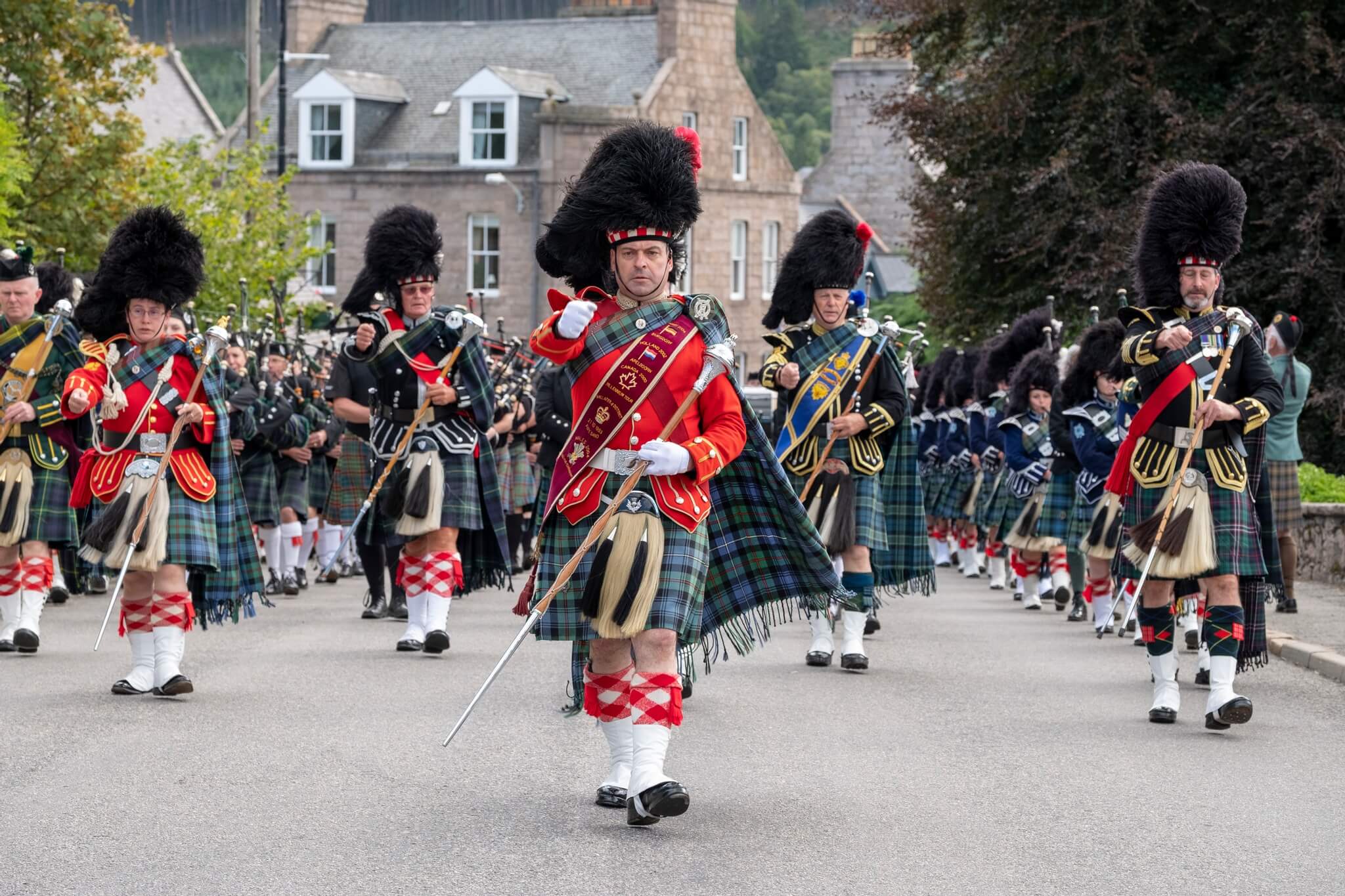
Highland Games

Castles

Ancestry

Clans

What is Scotland known for?

From our spectacular scenery, food and drink scene to iconic fashion statements, what is Scotland not known for? This country has played an important role in society, creating the most unforgettable adventures and inventions. Here are just some of the things you might come across during your visit.

Haggis stack at Mharsanta

© Mharsanta

Gaelic

Scottish Gaelic (Gàidhlig) is one of Scotland’s native languages and has played a crucial role in the country’s arts and culture scene from musical influences and place names to even popular TV series including Outlander. Today Gaelic is still spoken by around 70,000 Scots.

Discover the history behind Scottish Gaelic

Whisky

It wouldn’t be a trip to Scotland without trying our national drink, whisky. You’ll find over 130 active distilleries with many offering a range of tours. Get a behind-the-scenes look into the whisky making process and taste some of the finest drams.

Sample a dram of whisky

Haggis

Accompany your dram of whisky with Scotland’s national dish, haggis. Typically served with turnip (neeps) and potatoes (tatties), you’ll find this classic dish across many pubs and restaurants. Many Scots will have haggis as their main meal during Burns Night and St Andrews Day.

Dig into a hearty meal of haggis, neeps and tatties

Ben Nevis

© VisitScotland / Airborne Lens

Beautiful landscapes and nature 

When it comes to natural scenery, Scotland knows how to impress. Home to Ben Nevis (Scotland’s highest mountain), two national parks, Europe’s first Dark Sky Town and 282 Munros, this is just the start of your fascinating outdoor quest.

Witness Scotland’s natural beauty

Kilts and tartan

Kilts and tartan are at the heart of Scottish heritage, dating back as early as the 3rd and 4th century. In Scotland, you’ll find lots of mills producing this iconic fabric as well as museums explaining its origins and popularity throughout the years.

Discover the history behind kilts and tartan

Marvellous inventions 

Scotland has been the home of many major innovations in its time. At least 101 genius inventions have been recorded! From the telephone by Alexander Graham Bell, the television by John Logie Baird to tasty goodies including Dunlop cheese from Barbara Gilmour, the list goes on.

See some of Scotland’s greatest creations

National Museum of Flight

© VisitScotland / Kenny Lam

Where can I learn about Scotland's history?

Scotland is home to a plethora of museums to help ignite your curiosity with special exhibitions and displays running throughout the year. Head to the National Museum of Scotland in Edinburgh which covers everything from Scottish history and science to popular culture. Discover a world-class collection of aircraft and hear fascinating stories of the people who built them at the National Museum of Flight in East Lothian. Go on an island adventure in Shetland and discover its world-renowned collections through interactive displays at Shetland Museum and Archives. Or visit the Highland Folk Museum, Britain’s first open air museum. You’ll get the chance to step into the shoes of what life was like for a Highlander from the 1700s to the 1950s.
Museums and galleries

Get your culture fix and search for all our museums and galleries across Scotland with this handy map.

Check out the museums and galleries map

Best attractions for culture and history

Every attraction has a story to tell. Add these cultural gems to your bucket list and get ready to relive history.

Aurelius’ - Roman Head Sculpture by the Antonine Wall

Aurelius’ - Roman Head Sculpture by the Antonine Wall

© VisitScotland / Kenny Lam

For Ancient Scottish history 

Antonine Wall, Central Scotland – this 37-mile-long barrier was once the Roman Empire’s most northerly frontier. Built on the orders of the Emperor Antoninus Pius, its main purpose was to control trade and protect against Caledonian tribes. It was the last linear frontier built by the Romans until it was eventually abandoned in AD 160. Now a UNESCO World Heritage Site, it is an important part of Roman military architecture and frontier defence where you’ll find lots of Roman-themed sculptures and interactive exhibits for the whole family to enjoy. 

For Myths and legends 

Crathes Castle, Aberdeenshire – legend has it that you’ll hear things go bump in the night at Crathes Castle. Famously known as ‘The Green Lady’, this 16th century ghost made a dazzling appearance with her green mist and was often seen next to a fireplace carrying a young baby. Believed to be a servant for the Burnett family, her ghostly spirit is even more believable when her bones were found during renovation works in the 19th century. 

Find out more about Scotland’s myths and legends 

Harris Tweed cloth

“


Did you know Harris Tweed is the only fabric in the world that is guarded by its own Act of Parliament and statutory body, the Harris Tweed Authority?

For Scottish clans and battles 

Culloden Battlefield, Scottish Highlands – the site plays an important part in Scottish history during the 18th century. The Jacobite Rebellion of 1745 saw the demise of Bonnie Prince Charlie’s army where they tried to reclaim the British throne for the House of Stuart. After early success in battles including Prestonpans and Falkirk, the Jacobites were hopeful to take charge. However, through time many of the troops were starving and exhausted with many dropping out due to ill health. The final battle took place on April 1746 against the Duke of Cumberland and his redcoats at Culloden, near Inverness. It was the last major battle to take place on the British mainland and resulted in killing 1,600 men with 1,500 of them being Jacobites. 

Learn about the history of the Jacobites 

For Textile heritage 

The Harris Tweed Trail, Lewis and Harris, Outer Hebrides – aside from tartan, Harris Tweed is another popular fabric with a rich history. Handwoven in the Western Isles, it was recognised by Lady Catherine Herbert, widow of the 6th Earl of Dunmore who made every effort to promote this to the mainland markets. Her mission was successful and it can be found in many fashionable items of clothing including coats and bags. Attractions including the Harris Tweed Story Room offer tours which tell the story of fabric from the very beginning right through to the present day and live demonstrations of the weavers in action.  

5 Culture and History facts in Scotland

Scotland is filled to the brim with fascinating facts and stories to tell – there might even be some that surprise you. Get ready to brush up on your knowledge of the very best of Scotland’s culture and history.

The unicorn beside the Abbot House in Dunfermline

What is Scotland’s national animal? 

The unicorn, yes you read that right! This mythical creature has been linked to Scotland for many centuries. First used in the 12th century on the Scottish royal coat of arms by William I, the unicorn symbolises purity and innocence, as well as masculinity and power in Celtic mythology.

While the unicorn is mythological, its strong attributes make it the perfect fit to be Scotland’s national animal. When Scotland and England unified under the reign of James VI of Scotland in 1603, the Scottish Royal Arms had two unicorns supporting a shield. When James VI became James I of England and Ireland, he replaced the unicorn on the left of the shield with the national animal of England, the lion, to show that the countries were united. Today, you can go unicorn-spotting at iconic attractions including St Giles’ Cathedral in Edinburgh and at Delgatie Castle, one of the oldest and most historic castles in Scotland. 

What is Scotland’s national flower? 

Scotland’s national flower is the thistle. The origins of how this purple flowered thistle rose became an emblem of Scotland remain a mystery. Legend has it that a sleeping party of Scots warriors were saved from ambush by an invading Norse army when one of the enemies stepped on the spiky plant. His anguished cry had awoken the warriors who then defeated the invaders and adopted the thistle as their national emblem. If you’re visiting Scotland, you’ll find the thistle across many of our gardens, parks and countryside. 

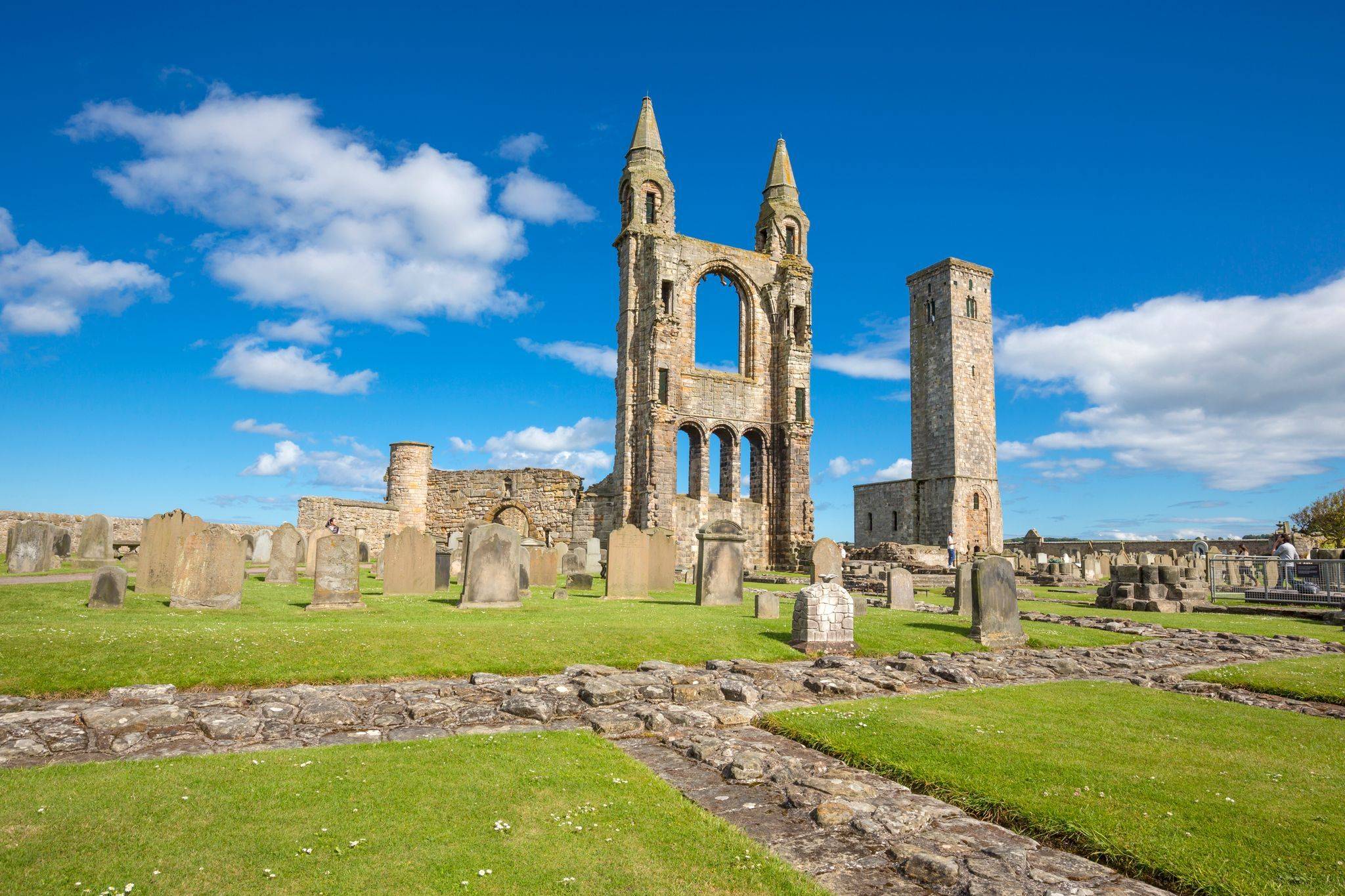
St Andrews Cathedral

What is the flag of Scotland called? 

The Saltire which is believed to be the oldest flag in Europe. The Saltire is instantly recognisable with its blue flag and white diagonal cross. It can be seen flying in the crowds of many international events, festivals and sporting events, as well as on churches and national and local government buildings.

Does Scotland have a patron saint? 

Yes, St Andrew became the patron saint of Scotland shortly after Scotland gained independence from England in 1320 (The Declaration of Arbroath) and held status with the Church to gain protection against the attempts of English kings to conquer the Scots. Legend has it that in the ninth century, the Pictish King, Angus mac Fergus, adopted St Andrew as the patron saint after The Battle at Athelstaneford in AD 832. This involved an army of Picts and Scots under King Angus who invaded the Lothians, which was still Northumbrian territory at the time. The king vowed that if, with St Andrew’s help he won, he would make him the patron saint of Scotland after seeing The Saltire appear in the sky. The rest, as they say, is history.

Find out more about our patron saint in the town named after him

Clachaig Inn

“


Did you know? British Sign Language (BSL) became an official language in Scotland in 2015.

What languages are spoken in Scotland?

In Scotland, there are four main languages. They are English, Scots, Scottish Gaelic and British Sign Language which have helped to shape our rich and vibrant culture. Scottish Gaelic is mostly spoken within the Highland & Islands communities and features heavily within our road signs and place names when travelling further north of the country. In the lowlands of Scotland, Scots was the adopted language and is officially recognised as a regional language by the UK government. It is often divided into four main Scots dialects: 

  • Insular Scots – spoken in the islands of Orkney and Shetland, heavily influenced by Scandinavian countries. 
  • Northern Scots – primarily spoken in the North East of Scotland for e.g. the city of Aberdeen. 
  • Central Scots – the widest spoken dialect which includes locations in the central belt for e.g. Edinburgh and Glasgow. 
  • Southern Scots – this dialect is primarily spoken in the Scottish Lowlands for e.g. the Scottish Borders. 

Scots words and meanings

Learn the local lingo and try out some new Scottish phrases.

18 Braw Scottish words & their meanings

3 Famous Scots and stories

What have the Scots done for us? Quite a lot, actually. Find out more about the Scots who have helped shape Scotland’s history, architectural and literary scene.

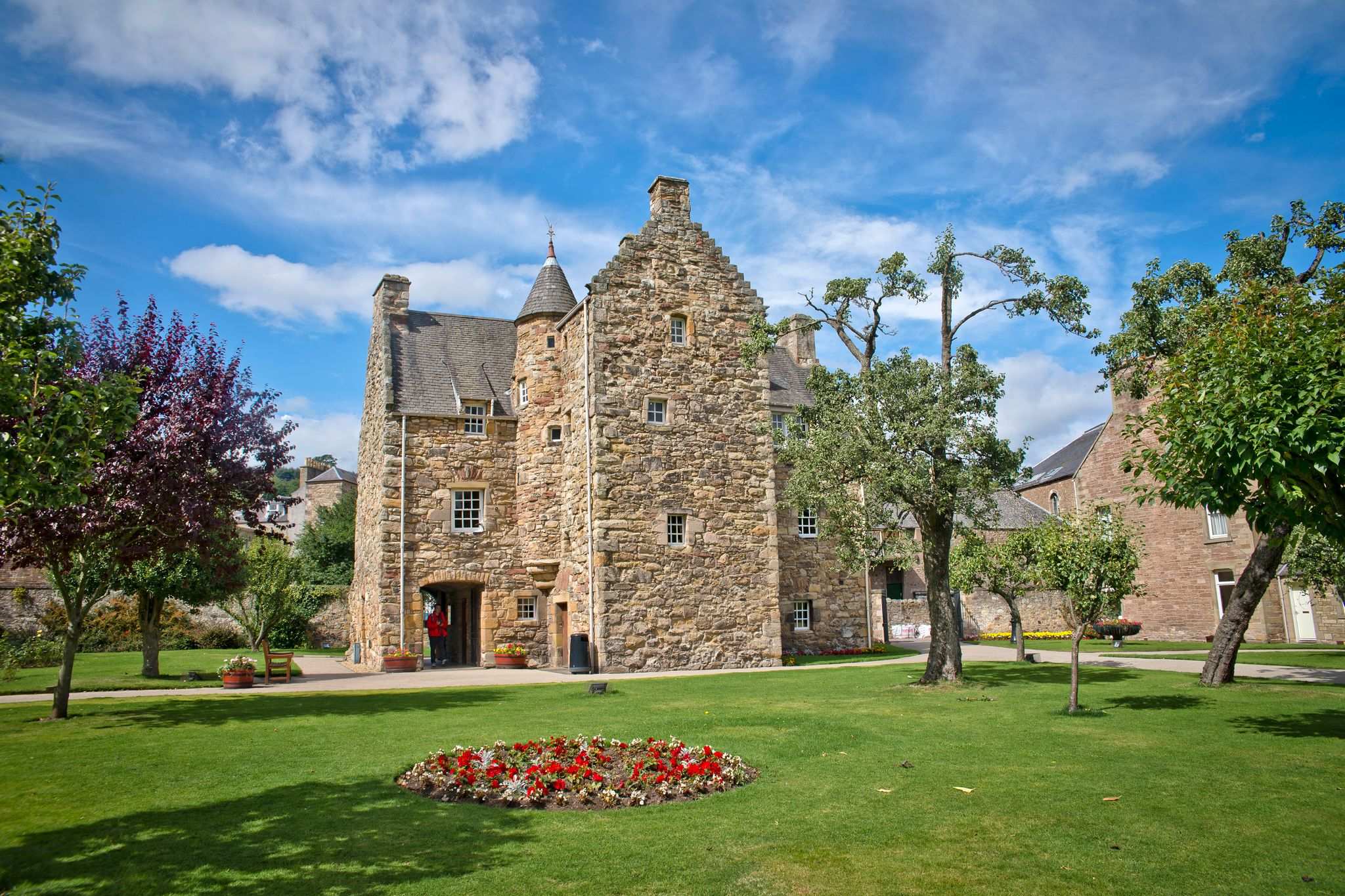
Mary Queen of Scots’ Visitor Centre

Mary Queen of Scots 

Born on 8 December 1542 at Linlithgow Palace, it’s fair to say Mary Queen of Scots had a turbulent life. With the death of her father, James V in 1542, Mary Queen of Scots took to the throne at just nine months old. Smuggled to France at aged five, she lived there until she was 18 years old and would later give birth to her only child. He would later become James VI of Scotland and I of England. Mary Queen of Scots marriage to her third husband, James Hepburn, Earl of Bothwell, who was the main suspect of murdering her second husband Lord Darnley, caused a huge uproar amongst Scottish nobles. Her demise soon followed as she was forced to abdicate from the throne and was imprisoned in Lochleven Castle but escaped almost a year later. Her last hours in Scotland were spent in Dundrennan Abbey in Dumfries & Galloway before journeying to England to seek protection from her cousin, Queen Elizabeth I. After being confined in England for 18 years, Queen Elizabeth I sanctioned Mary Queen of Scots death and was later beheaded on 8 February 1587. 

Read the fascinating timeline of Mary Queen of Scots’ life 

Robert Burns 

Each year on 25 January, Scots celebrate the life and legacy of Scotland’s National Bard Robert Burns, typically marking the occasion with a Burns Supper. Haggis, neeps and tatties is traditionally served, accompanied alongside whisky and some classic poetry recitations which include ‘Address to a Haggis’. This literary great has composed some of the world’s most instantly recognisable lines of poetry and song lyrics. 

Discover the history behind Scotland’s National Bard 

The music room at House for An Art Lover

© VisitScotland / Kenny Lam

Charles Rennie Mackintosh

When it comes to Scottish architecture, there’s one man that springs to mind for his innovative style. Charles Rennie Mackintosh is Scotland’s most celebrated architect and designer of the 20th century, and today his work is celebrated around the world. Discover his work and legacy across Glasgow, his hometown, where he left a beautiful and lasting legacy on the city. Some examples of his work include The Mackintosh Tearooms. Enjoy a spot of afternoon tea and learn more about his design work and collaborations. Or House for An Art Lover, where you’ll explore breathtaking rooms with lavishly detailed interiors that are filled with recognisable Mackintosh motifs, including the often-photographed White Music Room.

Discover more architectural wonders in Glasgow

Share on

Facebook
Pinterest
WhatsApp
Twitter
Email

Other things you might like

Category: Things to do

Scottish food & drink

Category: Things to do

Events & festivals in Scotland

Category: Places to go

Scotland's national parks and natural heritage sites

Category: Things to do

Tours of Scotland

Category: Travel & planning

Getting around Scotland by train FAQs

Category: Travel & planning

When is the best time to visit Scotland?

Category: Things to do

Scotland trip itineraries

Join our Newsletter Clan

Get Scotland inspiration direct to your inbox. Don't miss the inside track from our Scotland experts on exciting trip ideas, unique attractions and hidden gems loved by locals.

Get the Scotland newsletter

Get in touch

  • Contact us
  • Feedback & Complaints
  • Submit an event

Our other sites

  • Business Events
  • Business Support Hub
  • Travel Trade
  • Asset library
  • Corporate
  • Scotland is Now

Find us on

Find us on

  • About us
  • Accessibility
  • Acceptable use
  • Cookies
  • Environmental policy
  • Privacy
  • Social media
  • Terms of use
Brand Scotland

© 2026 VisitScotland. All rights reserved.